Senin, 09 November 2015

Golden Son: Book II of The Red Rising Trilogy, by Pierce Brown

Golden Son: Book II of The Red Rising Trilogy, by Pierce Brown

If you still need much more publications Golden Son: Book II Of The Red Rising Trilogy, By Pierce Brown as recommendations, visiting search the title and style in this site is offered. You will certainly locate more great deals books Golden Son: Book II Of The Red Rising Trilogy, By Pierce Brown in numerous disciplines. You can additionally when possible to read the book that is already downloaded. Open it and conserve Golden Son: Book II Of The Red Rising Trilogy, By Pierce Brown in your disk or device. It will certainly reduce you any place you require guide soft file to check out. This Golden Son: Book II Of The Red Rising Trilogy, By Pierce Brown soft file to review can be recommendation for everyone to boost the ability as well as capacity.
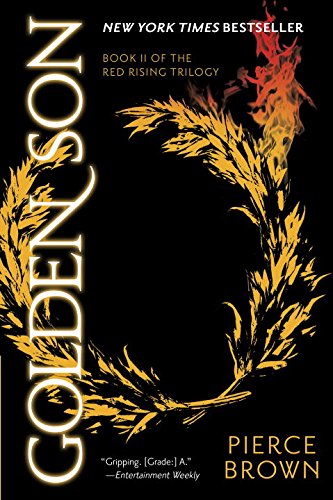
Golden Son: Book II of The Red Rising Trilogy, by Pierce Brown

Golden Son: Book II of The Red Rising Trilogy, by Pierce Brown


Golden Son: Book II of The Red Rising Trilogy, by Pierce Brown

Ebook PDF Golden Son: Book II of The Red Rising Trilogy, by Pierce Brown

NEW YORK TIMES BESTSELLER • NAMED ONE OF THE BEST BOOKS OF THE YEAR BY NPR, BUZZFEED, AND BOOKLIST • With shades of The Hunger Games, Ender’s Game, and Game of Thrones, debut author Pierce Brown’s genre-defying epic Red Rising hit the ground running and wasted no time becoming a sensation. Golden Son continues the stunning saga of Darrow, a rebel forged by tragedy, battling to lead his oppressed people to freedom.As a Red, Darrow grew up working the mines deep beneath the surface of Mars, enduring backbreaking labor while dreaming of the better future he was building for his descendants. But the Society he faithfully served was built on lies. Darrow’s kind have been betrayed and denied by their elitist masters, the Golds—and their only path to liberation is revolution. And so Darrow sacrifices himself in the name of the greater good for which Eo, his true love and inspiration, laid down her own life. He becomes a Gold, infiltrating their privileged realm so that he can destroy it from within.   A lamb among wolves in a cruel world, Darrow finds friendship, respect, and even love—but also the wrath of powerful rivals. To wage and win the war that will change humankind’s destiny, Darrow must confront the treachery arrayed against him, overcome his all-too-human desire for retribution—and strive not for violent revolt but a hopeful rebirth. Though the road ahead is fraught with danger and deceit, Darrow must choose to follow Eo’s principles of love and justice to free his people.   He must live for more.Praise for Golden Son  “Gripping . . . Both author and lead character have cranked up the emotional stakes. . . . With Golden Son, Brown avoids the sophomore slump, charging the novel with the kind of dystopia-toppling action you’d expect in a trilogy ender, not a middle volume. On virtually every level, this is a sequel that hates sequels—a perfect fit for a hero who already defies the tropes. [Grade:] A”—Entertainment Weekly  “Stirring . . . Comparisons to The Hunger Games and Game of Thrones series are inevitable, for this tale has elements of both.”—Kirkus Reviews“Brown writes layered, flawed characters . . . but plot is his most breathtaking strength. . . . Every action seems to flow into the next.”—NPR“It’s a far superior sequel, in fact: one of the rare breed of reads that improves upon its predecessor in every conceivable category. . . . In a word, Golden Son is stunning. Never mind how little we’ve seen of 2015: Among science fiction fans, it should be a shoo-in for book of the year.”—Tor.com“Pierce Brown is a prodigy. As great as the first book of the Red Rising Trilogy is, Golden Son is even better. A wild ride full of suspense, intrigue, and serious ass-kicking bravado, it’s expertly written and emotionally engaging, with top-notch universe-building that begs for further exploration. I want more!”—Christopher Golden, New York Times bestselling author of Snowblind   “The stakes are even higher than they were in Red Rising, and the twists and turns of the story are every bit as exciting. The jaw-dropper of an ending will leave readers hungry for the conclusion to Brown’s wholly original, completely thrilling saga.”—Booklist (starred review)   “Dramatic . . . the rare middle book that loses almost no momentum as it sets up the final installment.”—Publishers WeeklyFrom the Hardcover edition.

Golden Son: Book II of The Red Rising Trilogy, by Pierce Brown

  • Amazon Sales Rank: #1727 in Books
  • Published on: 2015-07-07
  • Released on: 2015-07-07
  • Original language: English
  • Number of items: 1
  • Dimensions: 8.20" h x 1.00" w x 5.50" l, .80 pounds
  • Binding: Paperback
  • 464 pages
Golden Son: Book II of The Red Rising Trilogy, by Pierce Brown

Amazon.com Review

An Amazon Best Book of the Month, January 2015: One of the pleasures of author Pierce Brown’s world building is the juxtaposition of the primitive and high-tech: blood feuds fought with complex weaponry, a game of truth mediated by lie-detecting scorpions, and, of course, an antiquated class system in a world where carvers can make a Red into a Gold. In Golden Son there is no shortage of deception or heroics and the action never wanes. There is no second book slump here, instead Brown amps up the tension by putting Darrow into ever greater physical and emotional conflict. Just like Red Rising, the first book in Brown's series, the end of Golden Son has me counting the days until the next (and final) book is released. --Seira Wilson

Review Praise for Golden Son  “Gripping . . . Both author and lead character have cranked up the emotional stakes. . . . With Golden Son, [Pierce] Brown avoids the sophomore slump, charging the novel with the kind of dystopia-toppling action you’d expect in a trilogy ender, not a middle volume. On virtually every level, this is a sequel that hates sequels—a perfect fit for a hero who already defies the tropes. [Grade:] A”—Entertainment Weekly  “Stirring . . . Comparisons to The Hunger Games and Game of Thrones series are inevitable, for this tale has elements of both.”—Kirkus Reviews   “Brown writes layered, flawed characters . . . but plot is his most breathtaking strength. . . .  Every action seems to flow into the next.”—NPR“It’s a far superior sequel, in fact: one of the rare breed of reads that improves upon its predecessor in every conceivable category. . . . In a word, Golden Son is stunning. Never mind how little we’ve seen of 2015: Among science fiction fans, it should be a shoo-in for book of the year.”—Tor.com“Pierce Brown is a prodigy. As great as the first book of the Red Rising Trilogy is, Golden Son is even better. A wild ride full of suspense, intrigue, and serious ass-kicking bravado, it’s expertly written and emotionally engaging, with top-notch universe-building that begs for further exploration. I want more!”—Christopher Golden, New York Times bestselling author of Snowblind   “The stakes are even higher than they were in Red Rising, and the twists and turns of the story are every bit as exciting. The jaw-dropper of an ending will leave readers hungry for the conclusion to Brown’s wholly original, completely thrilling saga.”—Booklist (starred review)   “Dramatic . . . the rare middle book that loses almost no momentum as it sets up the final installment.”—Publishers WeeklyPraise for Pierce Brown’s Red Rising   “[A] spectacular adventure . . . one heart-pounding ride . . . Pierce Brown’s dizzyingly good debut novel evokes The Hunger Games, Lord of the Flies, and Ender’s Game. . . . [Red Rising] has everything it needs to become meteoric.”—Entertainment Weekly   “[A] top-notch debut novel . . . Red Rising ascends above a crowded dystopian field.”—USA Today   “Compulsively readable and exceedingly entertaining . . . [a] must for both fans of classic sci-fi and fervent followers of new school dystopian epics.”—Examiner.com   “A story of vengeance, warfare and the quest for power . . . reminiscent of The Hunger Games and Game of Thrones.”—Kirkus Reviews   “Fast-paced, gripping, well-written—the sort of book you cannot put down.”—Terry Brooks, New York Times bestselling author of The Sword of Shannara   “Pierce Brown has done an astounding job at delivering a powerful piece of literature that will definitely make a mark in the minds of readers.”—The Huffington PostFrom the Hardcover edition.

About the Author Pierce Brown is the New York Times bestselling author of Red Rising and Golden Son. While trying to make it as a writer, Brown worked as a manager of social media at a startup tech company, toiled as a peon on the Disney lot at ABC Studios, did his time as an NBC page, and gave sleep deprivation a new meaning during his stint as an aide on a U.S. Senate campaign. He lives in Los Angeles, where he is at work on his next novel.


Golden Son: Book II of The Red Rising Trilogy, by Pierce Brown

Where to Download Golden Son: Book II of The Red Rising Trilogy, by Pierce Brown

Most helpful customer reviews

122 of 133 people found the following review helpful. Devilishly-plotted political thriller -- much better than RED RISING By Kathy Cunningham Pierce Brown's GOLDEN SON is the second installment in his "Red Rising Trilogy," a series of novels set in a dystopian future where a genetically-engineered elite is ruling the universe. Brown's premise is that future humanity has been divided into color-coded castes, with the super-strong, super-beautiful "Golds" at the top of the hierarchy. Beneath them, the other Colors fill a variety of pre-ordained roles (including police, doctors, entertainers, scholars, and laborers), all in the service of the all-powerful Golds. In the first installment of the series, RED RISING, 18-year-old Darrow, a common Red laborer from the mines of Mars, is recruited by a secret revolutionary group called the Sons of Ares to go undercover as a Gold in an attempt to destroy the Society from the inside. Darrow is physically and genetically altered by a "Carver" so that he can pass for a Gold, and he is accepted at one of their prestigious schools to begin training to become one of the elite Peerless Scared - the hope is that once he rises to the top of his class, he can be instrumental in tearing the system down. As GOLDEN SON begins, two years have passed since the events of RED RISING. Darrow, now 20, has been accepted by ArchGovernor Augustus and is set to begin further training in the art of War at the Academy. He has heard nothing from the Sons of Ares, and is unsure of his role in the revolution - and even if the revolution still exists. The first few chapters of GOLDEN SON are very much like the second half of RED RISING - lots of wargames as Darrow continues his "studies" and attempts to one-up his ruthless competition. But once the novel really gets going, it evolves into an intense, devilishly-plotted political thriller that sheds a harsh light on the nature of humanity.I wasn't a big fan of RED RISING - too much senseless violence as Brown's group of killer teens battle each other for power and position. In a way, RED RISING is like one long Hunger Games, with kids backstabbing, plotting, and killing each other in a race to be the one who rises to victory. But GOLDEN SON delivers what RED RISING only promised. Once Darrow leaves the Academy to take his position in Augustus's house, the games become much more serious. Suddenly, he's very much in demand in a world of desperate factions, each trying to get the jump on the rest. Augustus wants to use him to further his own political ambitions, his son Adrius (or the "Jackal") wants to use him to establish his own ascendency, and the Sons of Ares resurface with deadly plans of their own. The Bellona family wants Darrow's head (as well as the Governorship), the Sovereign wants to manipulate him, and even his closest friends can't be trusted. And while all this is going on, Darrow's own family of lowly Reds is still slaving away in the tunnels beneath Mars, believing Darrow is dead. Where do his loyalties really lie? Is he still committed to the dream his lovely young wife died for, or have his eyes been opened to realities she never knew existed?What works best in GOLDEN SON is Darrow himself, who must weigh all of the things he learns as an undercover Gold in an attempt to determine his own future, and that of his Society. And he learns a lot. The Jackal insists, "I'm going to help these ambitious lowColors move up, for a price." He says, "I need a warlord. I'll be Odysseus. You be Achilles." The Sons of Ares tell Darrow, "Good men die. To free them, to protect them, we must be savages." The corrupt and ruthless Sovereign tells him, "You cannot bend the worlds to fit your morals." But Darrow's own conscience tells him that victory is not worth the murder of millions. Augustus claims he would be a more benevolent leader, one who would work to unite the Colors rather than further divide them. But he, too, is hiding secret ambitions that have nothing to do with change and everything to do with maintaining a system that rewards the Golds at a cost of all those beneath them.The central message of Brown's trilogy isn't hard to decipher. As Darrow puts it, "It's not about our Color; it's about our hearts." He accepted his role as a pawn of the Sons of Ares because of his love for Eo, his 16-year-old wife who martyred herself to inspire a revolution. And her sacrifice - and her dream of a better future for all of the so-called lowColors - is what keeps him focused through much of the book. But he also loves Mustang, the ArchGovernor's feisty, rebellious daughter, although he keeps her at arm's length. She's a Gold, and he's a Red. They are Romeo and Juliet, forbidden to love one another. Of course this Juliet doesn't know that the man she loves is actually a lowly Red, an unworthy slave so far beneath her in stature that they shouldn't even speak to one another much less love. This is the obstacle he fights in this novel, and it's a huge one.I do recommend reading RED RISING before beginning GOLDEN SON. And be aware that this novel ends on a major cliff-hanger - there is no resolution, not even a temporary one. You will be desperate to read the third and final installment, and the wait may be long! Overall, this is a gripping, emotionally-charged story with grand themes and a protagonist who finds himself caught up in a political mess that may be impossible to unravel. Darrow says, early in the novel, "More and more do I believe the Sons of Ares chose the wrong man. I am not made for the cold war of politics." But it's this war - this insidious political maelstrom - that he must battle. He is a fighter, a killer even, but he's also a man with heart, a man with a vision of what the world could be if only the hierarchy were broken, if only people could be free. It's a great story. I highly recommend it.

32 of 36 people found the following review helpful. I read this as quickly as I read the first one! By Sneaky Burrito I read Red Rising in a matter of a few days and it was the same with Golden Son (which I picked up *immediately* after Red Rising).A lot of the things I liked about Red Rising were present in Golden Son, as well. The raw emotion we saw in the first 20% of so of book one were here, too, although it was a little more spaced out and there wasn't quite as much of it. But every time I was becoming a little less invested in the story, there'd be one of those moments where Darrow (the POV character, if you haven't read book one) would remember why he was doing what he was doing, what he was fighting for, something about his past, etc., and I'd be pulled right back in.I think characterization is a little uneven here, but that's the nature of any first-person POV book. Darrow is complex and intelligent and doesn't ever forget where he came from. However, he has conflicting emotions and he is most definitely NOT infallible. And he's walking a tight line -- he needs the support of his high-status (Gold) patron, but his own feelings tend towards "demokratic" (to use the spelling from the book). There are some revelations about certain characters in the book that almost make me want to go back and read Red Rising again with this additional knowledge, to see if there were subtle clues in their behavior that pointed towards future events.One thing this book has going for it is that the villains who play main roles in the story are not one-dimensional. And you don't always know they're villains, until it's too late. Trust is a big issue here -- Darrow wants to trust people but sometimes chooses the wrong allies, sometimes shuts out people he shouldn't. But he also makes some decisions to trust people, especially people with lower social status (lets a Blue captain his ship, lets an Orange give him advice with respect to throwing off enemies, gives a Stained man a weapon traditionally used only by the nobility) that I think will be important in book three. (If you haven't read book one, various social classes have colors and pretty much everything they are allowed to do or not do is dictated by what color a person is born into. Darrow was born a Red -- a low working class -- but has been altered to appear a Gold, the ruling class.)The weak point, I think, is that this is a very similar book to Red Rising. What was carried out on the ground with castles, among students, was transferred to ships in space. The same rivalries and many of the same characters were back. (On the plus side, the same narrative structure of defeat followed by victory followed by defeat was in place, and that really worked. Pierce Brown doesn't really ever take EVERYTHING away from his heroes, even when things are looking pretty grim. There's always some way out. I hate reading about defeats for characters I've come to care about, but I know that if I get through them, some triumph -- even a small one -- is sure to come soon. So even though the book did not end on a happy note for me -- and it was somewhat of a cliffhanger, for people who hate such things -- I have hopes for the outcome after volume three, and wish I didn't have to wait for it!)This series is shaping up to be a rather typical hero's journey, I think. It has a fair amount in common (overall structure wise, though not with respect to individual events) with the original Star Wars trilogy. I sometimes get bored with such stories, but the writing style (present tense, too, which usually bothers me but I don't even notice it here), the emotion, the action, and the ups and downs really all worked together to keep me interested.I would not start the series with this book. Not only will you learn so much more about the characters, the world of the story, etc., when you read about them in book one, but Red Rising is really an entertaining book in its own right and you won't want to miss out on that.

35 of 42 people found the following review helpful. A seriously stellar followup to Red Rising. By Jessica@RabidReads Right. SO . . . after finishing Golden Son did I:A. Shriek incomprehensibly. Over and over (and over) again.B. Sit in a semi-comatose state staring at NOTHING for an indefinite period of time.C. Explain (in detail) to my poor mother (whom I was visiting) EXACTLY what my problem was, despite her having never read either book from this series, and thus being unable to understand what I was ranting about.(That was a rhetorical question. Obviously, I did them ALL.)Pierce Brown, (handsome) devil that he is, lured us in a false sense of security in Red Rising. He taught us that, yes, Bad Things would happen---LOTS of Bad Things would happen---but by the end, we'd have found our feet. We'd know that there was more coming---and HOORAY for that---but the individual installment would be resolved. Golden Son: Book II of The Red Rising Trilogy, by Pierce Brown


Golden Son: Book II of The Red Rising Trilogy, by Pierce Brown PDF
Golden Son: Book II of The Red Rising Trilogy, by Pierce Brown iBooks
Golden Son: Book II of The Red Rising Trilogy, by Pierce Brown ePub
Golden Son: Book II of The Red Rising Trilogy, by Pierce Brown rtf
Golden Son: Book II of The Red Rising Trilogy, by Pierce Brown AZW
Golden Son: Book II of The Red Rising Trilogy, by Pierce Brown Kindle

Golden Son: Book II of The Red Rising Trilogy, by Pierce Brown

Golden Son: Book II of The Red Rising Trilogy, by Pierce Brown

Golden Son: Book II of The Red Rising Trilogy, by Pierce Brown

The Story behind Miss Fisher's Murder Mysteries: The Mystery Drama based on Kerry Greenwood's Popular Novels [Article],

The Story behind Miss Fisher's Murder Mysteries: The Mystery Drama based on Kerry Greenwood's Popular Novels [Article], by D. Carter

Even we talk about the books The Story Behind Miss Fisher's Murder Mysteries: The Mystery Drama Based On Kerry Greenwood's Popular Novels [Article], By D. Carter; you could not locate the printed publications here. A lot of collections are given in soft file. It will exactly give you much more advantages. Why? The first is that you may not need to bring the book everywhere by satisfying the bag with this The Story Behind Miss Fisher's Murder Mysteries: The Mystery Drama Based On Kerry Greenwood's Popular Novels [Article], By D. Carter It is for the book is in soft data, so you can save it in device. Then, you can open the gizmo almost everywhere as well as read the book correctly. Those are some couple of benefits that can be obtained. So, take all benefits of getting this soft file book The Story Behind Miss Fisher's Murder Mysteries: The Mystery Drama Based On Kerry Greenwood's Popular Novels [Article], By D. Carter in this web site by downloading and install in web link given.

The Story behind Miss Fisher's Murder Mysteries: The Mystery Drama based on Kerry Greenwood's Popular Novels [Article], by D. Carter

The Story behind Miss Fisher's Murder Mysteries: The Mystery Drama based on Kerry Greenwood's Popular Novels [Article], by D. Carter


The Story behind Miss Fisher's Murder Mysteries: The Mystery Drama based on Kerry Greenwood's Popular Novels [Article], by D. Carter

PDF Ebook Download : The Story behind Miss Fisher's Murder Mysteries: The Mystery Drama based on Kerry Greenwood's Popular Novels [Article], by D. Carter

This article examines Miss Fisher’s Murder Mysteries. The Australian drama series follows Phryne Fisher, the amateur detective from Kerry Greenwood’s mystery novels. Find out what the series is about, and how it was created. [Article: 1,517 words]

The Story behind Miss Fisher's Murder Mysteries: The Mystery Drama based on Kerry Greenwood's Popular Novels [Article], by D. Carter

  • Amazon Sales Rank: #418759 in eBooks
  • Published on: 2015-07-01
  • Released on: 2015-07-01
  • Format: Kindle eBook
The Story behind Miss Fisher's Murder Mysteries: The Mystery Drama based on Kerry Greenwood's Popular Novels [Article], by D. Carter


The Story behind Miss Fisher's Murder Mysteries: The Mystery Drama based on Kerry Greenwood's Popular Novels [Article], by D. Carter

Where to Download The Story behind Miss Fisher's Murder Mysteries: The Mystery Drama based on Kerry Greenwood's Popular Novels [Article], by D. Carter

Most helpful customer reviews

18 of 19 people found the following review helpful. Rip-off By P. Gjerstad $3 for what turned out to be a short newspaper or magazine article on why the series was made? With virtually no details? And even including a synopsis of the first episode that buyers, who have seen and or read all that, knew already??? This should have been free. It shouldn't have been sold at all. Worthless!

1 of 2 people found the following review helpful. 20's Detective By James L. Smethers Great insider knowledge for those who love the series.

See all 2 customer reviews... The Story behind Miss Fisher's Murder Mysteries: The Mystery Drama based on Kerry Greenwood's Popular Novels [Article], by D. Carter


The Story behind Miss Fisher's Murder Mysteries: The Mystery Drama based on Kerry Greenwood's Popular Novels [Article], by D. Carter PDF
The Story behind Miss Fisher's Murder Mysteries: The Mystery Drama based on Kerry Greenwood's Popular Novels [Article], by D. Carter iBooks
The Story behind Miss Fisher's Murder Mysteries: The Mystery Drama based on Kerry Greenwood's Popular Novels [Article], by D. Carter ePub
The Story behind Miss Fisher's Murder Mysteries: The Mystery Drama based on Kerry Greenwood's Popular Novels [Article], by D. Carter rtf
The Story behind Miss Fisher's Murder Mysteries: The Mystery Drama based on Kerry Greenwood's Popular Novels [Article], by D. Carter AZW
The Story behind Miss Fisher's Murder Mysteries: The Mystery Drama based on Kerry Greenwood's Popular Novels [Article], by D. Carter Kindle

The Story behind Miss Fisher's Murder Mysteries: The Mystery Drama based on Kerry Greenwood's Popular Novels [Article], by D. Carter

The Story behind Miss Fisher's Murder Mysteries: The Mystery Drama based on Kerry Greenwood's Popular Novels [Article], by D. Carter

The Story behind Miss Fisher's Murder Mysteries: The Mystery Drama based on Kerry Greenwood's Popular Novels [Article], by D. Carter

Kamis, 05 November 2015

Walking Dead 2016 Engagement Calendar, by American Movie Channel

Walking Dead 2016 Engagement Calendar, by American Movie Channel

So, just be below, discover the publication Walking Dead 2016 Engagement Calendar, By American Movie Channel now and also review that swiftly. Be the initial to read this publication Walking Dead 2016 Engagement Calendar, By American Movie Channel by downloading and install in the web link. We have a few other publications to read in this web site. So, you could find them likewise conveniently. Well, now we have actually done to supply you the very best publication to check out today, this Walking Dead 2016 Engagement Calendar, By American Movie Channel is truly suitable for you. Never ignore that you need this e-book Walking Dead 2016 Engagement Calendar, By American Movie Channel to make much better life. On-line e-book Walking Dead 2016 Engagement Calendar, By American Movie Channel will actually provide simple of every little thing to check out and take the advantages.

Walking Dead 2016 Engagement Calendar, by American Movie Channel

Walking Dead 2016 Engagement Calendar, by American Movie Channel


Walking Dead 2016 Engagement Calendar, by American Movie Channel

Download Ebook PDF Online Walking Dead 2016 Engagement Calendar, by American Movie Channel

The Walking Dead on AMC is our bestselling calendar in the wall, mini, and daily formats! Now in its 5th season, it is the most-watched drama in cable history, viewed by millions around the globe. New for 2016 are the weekly and desk pad formats, giving fans even more options for keeping track of the year with the characters and zombies of this red-hot series.

Walking Dead 2016 Engagement Calendar, by American Movie Channel

  • Amazon Sales Rank: #1038615 in Books
  • Published on: 2015-07-25
  • Format: Engagement Calendar
  • Original language: English
  • Number of items: 1
  • Dimensions: .80" h x 6.60" w x 9.40" l,
  • Binding: Calendar
  • 36 pages
Walking Dead 2016 Engagement Calendar, by American Movie Channel


Walking Dead 2016 Engagement Calendar, by American Movie Channel

Where to Download Walking Dead 2016 Engagement Calendar, by American Movie Channel

Most helpful customer reviews

0 of 0 people found the following review helpful. Highly Recommend! By sharon0911 Being a big fan of the show, when I received this, pleasantly surprised, how "Perfect" this is! The pictures are quite nice, and more than enough room for daily planning!

0 of 0 people found the following review helpful. awesome weekly engagement calendar for 2016 By Jane Austin Outstanding - this is my favorite Walking Dead calendar, lots of pictures of the cast!

0 of 0 people found the following review helpful. Awesome pics! Will make a great gift and one ... By Linda B. Awesome pics! Will make a great gift and one left for me.

See all 6 customer reviews... Walking Dead 2016 Engagement Calendar, by American Movie Channel


Walking Dead 2016 Engagement Calendar, by American Movie Channel PDF
Walking Dead 2016 Engagement Calendar, by American Movie Channel iBooks
Walking Dead 2016 Engagement Calendar, by American Movie Channel ePub
Walking Dead 2016 Engagement Calendar, by American Movie Channel rtf
Walking Dead 2016 Engagement Calendar, by American Movie Channel AZW
Walking Dead 2016 Engagement Calendar, by American Movie Channel Kindle

Walking Dead 2016 Engagement Calendar, by American Movie Channel

Walking Dead 2016 Engagement Calendar, by American Movie Channel

Walking Dead 2016 Engagement Calendar, by American Movie Channel

The Theft Of Memory (Thorndike Press Large Print Biographies & Memoirs Series), by Jonathan Kozol

The Theft Of Memory (Thorndike Press Large Print Biographies & Memoirs Series), by Jonathan Kozol

Learn the method of doing something from numerous sources. Among them is this book entitle The Theft Of Memory (Thorndike Press Large Print Biographies & Memoirs Series), By Jonathan Kozol It is an effectively known publication The Theft Of Memory (Thorndike Press Large Print Biographies & Memoirs Series), By Jonathan Kozol that can be referral to review now. This suggested book is among the all excellent The Theft Of Memory (Thorndike Press Large Print Biographies & Memoirs Series), By Jonathan Kozol collections that are in this website. You will likewise locate other title and also styles from numerous writers to browse here.

The Theft Of Memory (Thorndike Press Large Print Biographies & Memoirs Series), by Jonathan Kozol

The Theft Of Memory (Thorndike Press Large Print Biographies & Memoirs Series), by Jonathan Kozol


The Theft Of Memory (Thorndike Press Large Print Biographies & Memoirs Series), by Jonathan Kozol

Free PDF Ebook The Theft Of Memory (Thorndike Press Large Print Biographies & Memoirs Series), by Jonathan Kozol

National Book Award winner Jonathan Kozol is best known for his fifty years of work among our nation s poorest and most vulnerable children. Now, in the most personal book of his career, he tells the story of his father s life and work as a nationally noted specialist in disorders of the brain and his astonishing ability, at the onset of Alzheimer s disease, to explain the causes of his sickness and then to narrate, step-by-step, his slow descent into dementia. Dr. Harry Kozol was born in Boston in 1906. Classically trained at Harvard and Johns Hopkins, he was an unusually intuitive clinician with a special gift for diagnosing interwoven elements of neurological and psychiatric illnesses in highly complicated and creative people. One of the most intense relationships of his career, his son recalls, was with Eugene O Neill, who moved to Boston in the last years of his life so my father could examine him and talk with him almost every day. At a later stage in his career, he evaluated criminal defendants including Patricia Hearst and the Boston Strangler, Albert H. DeSalvo, who described to him in detail what was going through his mind while he was killing thirteen women. But"The Theft of Memory"is not primarily about a doctor s public life. The heart of the book lies in the bond between a father and his son and the ways that bond intensified even as Harry s verbal skills and cogency progressively abandoned him. Somehow, the author says, all those hours that we spent trying to fathom something that he wanted to express, or summon up a vivid piece of seemingly lost memory that still brought a smile to his eyes, left me with a deeper sense of intimate connection with my father than I d ever felt before. Lyrical and stirring, "The Theft of Memory"is at once a tender tribute to a father from his son and a richly colored portrait of a devoted doctor who lived more than a century."

The Theft Of Memory (Thorndike Press Large Print Biographies & Memoirs Series), by Jonathan Kozol

  • Amazon Sales Rank: #3153272 in Books
  • Published on: 2015-10-07
  • Format: Large Print
  • Original language: English
  • Number of items: 1
  • Dimensions: 8.60" h x .90" w x 5.50" l, .0 pounds
  • Binding: Hardcover
  • 299 pages
The Theft Of Memory (Thorndike Press Large Print Biographies & Memoirs Series), by Jonathan Kozol

Review Praise for "Fire in the Ashes" - "Kozol's storytelling gifts shine through: with simple anecdotes that show the soulful humor, compassion, and wisdom that kindles progress among the survivors." "Christian Science Monitor" - "In this engaging, illuminating, often moving book, [Kozol] recounts the lives of poor black and Latino children -- many now close friends -- who once lived in Manhattan's Martinique Hotel.... Clear-eyed, compassionate and hopeful." "Kirkus Reviews" (starred)Praise for "Fire in the Ashes" "Kozol's storytelling gifts shine through: with simple anecdotes that show the soulful humor, compassion, and wisdom that kindles progress among the survivors." "Christian Science Monitor" "In this engaging, illuminating, often moving book, [Kozol] recounts the lives of poor black and Latino children -- many now close friends -- who once lived in Manhattan's Martinique Hotel.... Clear-eyed, compassionate and hopeful." "Kirkus Reviews" (starred)"

About the Author JONATHAN KOZOLis the author of"Death at an Early Age," "Savage Inequalities," "Amazing Grace," and other award-winning books about young children and their public schools."

Excerpt. © Reprinted by permission. All rights reserved. Chapter OneThe Onset of an IllnessMy father was diagnosed with Alzheimer’s disease in 1994 when he was eighty-­eight years old. He was a neurologist, with an extensive practice in psychiatry as well, and had taught for many years at one of Harvard’s major teaching hospitals. It was one of the doctors he had trained who made the formal diagnosis of his illness.The earliest signs of problems with his memory appeared about four years before. There would be times when he found it difficult to summon up the name of someone he knew well. Now and then, he’d also lose his purchase on a set of facts with which he wanted to support an argument. At other times, he’d briefly lose his sense of continuity in the course of what was otherwise a cogent conversation.But my father had tremendous social competence. He’d navigate these awkward moments with congenial ease. He’d smile at his own mistake, then offer me perhaps a glass of brandy, and sit down and question me about my work, or tell me of a book that he was reading, or share with me an anecdote about his own career.Sometimes he would light his pipe. (He liked to take his time packing the tobacco.) The aroma of the smoke as it rose up about him remains in my memory, comfortably intertwined with the sense of relaxation, confidence, and calm that I identified with all those other quiet and consoling conversations we had had over the years.Then, in 1991, he started to get lost at night when he’d go out to take a walk in Copley Square, which is in the neighborhood of Boston where he and my mother lived. He’d come home three hours later and report perhaps that he had made friends with a couple visiting from London or Geneva, or that he had been at Buddenbrooks, a bookstore that was close to his apartment, and had had a conversation with a foreign student whom he might have met there. My mother would worry terribly, of course, when he was gone so long. His interesting narratives, I thought, were meant to reassure her.In spite of his confusions, he continued to try very hard to get some work done every day. He had given up his medical practice by that time, but he was determined to complete some papers he’d begun—­ summations of ideas that he’d developed in the course of his career on the neurological and psychiatric origins of certain forms of pathological behavior. A friend of mine, a teaching assistant at a local university, was helping him to organize his thoughts and bring coherence to his writing. On occasion, when my father asked, I would help him too.It was not long after this, however, that my father’s restlessness would overcome his capability for concentration. After an hour or two of work, he would push the pages aside, get up from his desk, put on his jacket and an overcoat, if it was cold weather, go down to the lobby of the building, and head off into the nearby streets for another of his evening journeys.One night in 1992, he asked me to sit down with him in a room of his apartment that he’d been using to store an old examination table and some other items from his former office. He said there was something he needed to discuss with me. He told me that he hadn’t yet decided whether it was wise to discuss this with my mother.After he had closed the door, and both of us were seated, he started to lay out to me, in fairly graphic terms, what he described as “new and more specific indications” of problems he was having, which, he said, were “clearly neurological.” He checked again to be sure the door was firmly closed and then began explaining to me what he meant by “more specific indications.”He said that he’d been having “spells”—­he added that he did not mean by this the incidents of memory loss, which he called “amnestic spells,” but something “of a different order altogether.” He spoke of these as “brief attacks of interrupted consciousness” during which he recognized “a sudden cutoff from my own surroundings,” “a definite blocking of ‘capacity,’ ” lasting “maybe only for a millisecond or for several seconds or a trifle more.” These episodes, he said, had been preceded in each instance by “an aura of impending danger” that he likened to the sense of warning epileptics often feel just prior to a seizure.He did not say this with the urgent sense of self-­concern one might expect a series of events like these would ordinarily arouse. Instead, he spoke as if he was attempting to position these events at a distance from himself, so that he could speak of them with the detachment of an interested observer.“I can pinpoint this as a neurologist,” he said, and he speculated that his recollection of what he’d been observing in himself might hold potential value for clinicians and researchers. For this reason, he plugged in his office tape machine, which he had used to dictate letters and reports on patients he was treating, and he recorded the remainder of our conversation.He said that the amnestic spells were “clear-cut indications of degeneration of the cells in the cortex of the brain and in the hippocampus,” and he showed me by the placement of his hand exactly where the hippocampus lies. He speculated also that “mini-­strokes of very short duration,” which he termed “a vascular phenomenon,” were in all likelihood the reason for his episodes of interrupted consciousness.Even more specific was the detail that he brought to the portrayal of that aura of anticipation that preceded this. He described it as “a feeling of uncommon and uncomfortable heat, ‘a hood of heat,’ as it were, that someone or some unknown force is drawing down over my forehead and my eyes . . . , as far down maybe as my chest or throat,” and in another and, to me, more memorable phrase, “a feeling of impending desecration of my own autonomy—­a premonition of my imminent removal from contextual reality. . . .”During that experience, or intermingled somehow with the loss of consciousness that followed, my father told me he was suddenly aware of “a very bright light,” like that of “a locomotive bearing down upon you in a station.” But then, after a moment of reflection, he corrected this from singular to plural—­“No. Not a single light. Many lights”—­and then, as if he was, step by step, retrieving the experience with more and more precision, he said, “I’m now recalling it more clearly. This was not a static light. It was more like flashing lights, coming up in rhythm. Thousands of lights shooting upward . . . and symmetrical. I remember that this frightened me. I needed you to know this.”It was the first time in the conversation that he let himself concede that he had been alarmed by this experience. “Those flashing lights are warnings of irregular electrical activity in the neurons, or between the neurons, which may terminate quite rapidly—­or may not. In my case, it ended very quickly.”In the most recent incident, he recalled, “As I was coming out of this, I was aware of being very cold. There was cold sweat on my upper lip. Your mother was with me. She could see me shivering.”When I asked him where he was, he said, “In a restaurant. We were having dinner.” As the attack subsided, he went on, “I heard a loud voice. ‘Harry, are you hearing me?’ ” Although my mother realized that he wasn’t well, he did not reveal to her what he’d just been through, because, he said, “Your mother’s constant worrying is worse than anything my hippocampus may intend to do to me.” I hoped my mother wasn’t listening outside the door while he was speaking. . . . Having said this much, he seemed to be relieved, and he fell into a more reflective and more contemplative state of mind. Speaking now with less of the alarm he had displayed a moment earlier but once again in the more measured tone with which he had begun the conversation, he speculated that the light phenomena he had recalled (those “flashing lights coming up in rhythm . . . and symmetrical”) “would have to have emerged from the occipital”—­“from the posterior of the occipital,” he specified, which he then explained to me, as if I were his student in a class on physiology, “is the region of the brain that processes our visual experience.“This part,” he said, “is something of a puzzlement. It’s something that I’ve never seen in any of my patients. . . .”At that point, I suggested—­not without some hesitation—­that perhaps he ought to speak about these episodes with one of his colleagues. I asked him whether it was wise for him to try to fill the role of being his own doctor.He looked at me for a long moment, searchingly, it seemed. Then he said that he intended to talk with a neurologist with whom he’d consulted on many of his cases—­“I think I told you he was once my student”—­but he took the opportunity to entertain himself by remarking that, although the man in question was “very bright” and “top-­rate in the field,” he was “a peculiar fellow, humorless and dour. Always was, as long as I have known him. I used to want to ask him what it’s like to go through life without a personality.”He told me, in any case, not defensively or angrily but simply as a statement of determination, that he would see him at a time of his own choosing. “I want to ask you not to pressure me about this.” He added that his confidence that I’d respect his judgment was precisely why he’d had this conversation with me, and not with my mother.He waited another year and a half, but when he knew the time was right he phoned his younger colleague and set up the consultation. There were no surprises. He knew what he would hear. The diagnosis by his former student was simply confirmation of what he already had discerned.Chapter TwoThe Ends of DaysMy father continued to live in the apartment for two years after that. It wasn’t easy for my mother as his restlessness intensified and his memory progressively declined. The friend who had been helping him to organize his writings began to stay there overnight to relieve my mother’s burden and to help my father deal with his confusions.There were days when he would seem almost clear of mind. His conversational agility had not departed him. When he was in a tranquil mood, he could still be courtly with my mother. For all the tensions that simmered up between them, she didn’t want to lose him.Then, in 1996, he fell in the street in front of their apartment building on a rainy evening. A police car took him to the hospital. He had suffered a displacement of his hip. After surgery, when he came out of anesthesia, he had lost almost all recognition of what had happened to him, what his present life was like, or even where he lived.After several weeks had passed, he regained a number of these memories, as well as a partial understanding of the situation he was in; but the time in which he’d been under anesthesia seemed to have left its permanent result in an unmistakable reduction of his cognitive capacity. He had to be placed in a rehabilitation center after surgery, and then, because of the suddenly accelerated diminution of his competence, I had to move him to a nursing home.I was somewhat on my own in making these arrangements. Although I have an older sister, she had moved away from Boston more than forty years before and had settled in the Midwest with the man she married. She had two children (they were adults now) and an extended family of her husband’s relatives, and many obligations and demands upon her time far from Massachusetts. For these reasons among others (my father had appointed me to be his legal guardian), decisions about choosing the right nursing home, working out the numbers for the costs this would entail, and making it a smooth transition fell to me, as did later choices that affected his well-­being. My mother, of course, guided me as best she could in most of these decisions.In the following month, my mother asked me to come in and try to sort out some of Daddy’s correspondence and his other papers. Several years before, he had sent me most of the case histories and related documents from his medical career for safe-­keeping in my home, where they remained in large sealed boxes I had never opened. But there were other items he’d left here in his desk and in a metal filing case in a corner of the living room.While looking through these documents, I found a picture of my father as a child. The photo was from 1912, when he was six years old. He was wearing knickers and a long-­sleeved shirt, leaning against his father, who was wearing a formal-­looking suit, a shirt with a round collar, and a broad and thickly knotted tie. My father’s hand was holding his father’s hand. The photo had a brownish tinge.My mother was older than my father. He was ninety when he went into the nursing home; she was ninety-­two. Although her body had grown frail, she was still a relatively healthy woman and still sharp and lucid in her thinking. But when my father had to go into the nursing home I saw a lost look in her eyes I’d never seen before. When I was sitting with her in her bedroom later in the week, she looked away from me, gazing out the window, across the river, at the Cambridge skyline, for the longest period of time. I had to speak in a loud voice to bring her back so she would see that I was there and speak to me directly. I showed her the picture of my father that I’d found. She said, “Your grandfather was a handsome man, but no man that I ever met was as good-­looking as your father!”My grandfather had come to the United States ten years before that photograph was taken: the start of a century that now was nearly at its end. He had grown up in a village in the Ukraine, which was part of Russia then. My grandmother followed him two years later on a ship from Rotterdam to Boston.Grandpa was a tailor but was earning very little money at the time when she arrived, so she somehow managed—­I still do not know how—­to rent or lease a tiny store where she sold eggs and milk and ice and soda, which was known as “tonic” in those days, and some other groceries. I was close to my grandmother when I was a child. She lived on Seaver Street in Roxbury, which had been a mostly Jewish neighborhood until recent years. When I was at Harvard College, I would sometimes visit her on Friday nights.


The Theft Of Memory (Thorndike Press Large Print Biographies & Memoirs Series), by Jonathan Kozol

Where to Download The Theft Of Memory (Thorndike Press Large Print Biographies & Memoirs Series), by Jonathan Kozol

Most helpful customer reviews

18 of 18 people found the following review helpful. Heartrendingly honest but deeply encouraging By Trudie Barreras “The Theft of Memory” by Jonathan Kozol is a radical departure from his typical writing relating to the deficits in education policy and academic support of disadvantaged children in America’s ghettos. Rather, it is a deeply moving personal memoir about his experiences in dealing with his father’s prolonged struggle with Alzheimer’s Disease and eventual death, at the age of 102, in 2008.Jonathan’s father, Dr. Harry Kozol, was a renowned and pace-setting neuropsychiatrist, significant not only because of his writing and clinical expertise, but noted on the national scene for having been called to consult and give testimony at the sensational trials of Patty Hearst and the “Boston Strangler”. In the early 1990’s, however, Dr. Kozol began to experience the onset of his illness, and as a result of his own professional knowledge, was able to enlist his son’s cooperation in making realistic and practical arrangements for his eventual decline.Kozol’s memoir is meaningful at many levels. First, of course, it is a heartfelt and touching testimony of a son’s deep concern for his parents. Jonathan’s mother, Ruth, was not afflicted with Alzheimer’s, but she, too, lived to be over 100, and during her last years was physically feeble though mentally acute. Due to the relatively comfortable financial status of the elder Kozols at the time of the onset of Harry’s illness, it was possible to provide more than adequate care during the early years of the doctor’s decline, but even so the eventual financial stress became acute. The author is honest that this can be a major issue, especially for those of more modest resources.Jonathan Kozol is sharply critical of some of the professional medical attention his father received, while being strongly affirmative about the devoted efforts of the several attendants who were retained to give private care, both during Dr. Kozol’s sojourn in a residential nursing facility, and after the decision was eventually made to return him to home care. It is clear he considers the deficit in geriatric medical care as relevant to our national lack of concern, just as he has previously deplored the neglect of the educational needs of disadvantaged children.Finally, this book gives an insightful first-person description of both the challenges and the rewards of becoming reacquainted with one’s parents in their declining years. As it happens, I am approximately the same age as Jonathan Kozol, and had both my parents living in my home during their final years. Neither made it to the “century mark”, and neither had Alzheimer’s, but none-the-less I found myself deeply moved by his narrative and able to relate to many of his observations and conclusions. As a result, I can assert with confidence that this book should be extremely meaningful to anyone who is facing a similar experience in terms of dealing with aging of self or loved ones. It is heartrendingly honest, but also deeply encouraging.

12 of 14 people found the following review helpful. Mosaic Memories . . . . By SundayAtDusk Books on parents with Alzheimer's disease, like books on children with autism, are abundant these days. I usually don't read disease stories any longer, but decided to get this book since I'm familiar with Jonathan Kozol's writings. Also, the promise in the book's description of his father, Dr. Harry Kozol, narrating "step-by-step, his slow descent into dementia" was intriguing. Dr. Kozol does do a bit of that in the beginning of his illness, but it's very limited. Much of the book is actually about the care an Alzheimer's patient needs, how the need for such extensive and expensive care affects the family, as well as the need to find competent, compassionate health care workers to provide good care. In true Jonathan Kozol form, he points out how those who are seen as not having anything further to contribute to society, often don't receive the same high quality care as those who have a future of possible contributions.The rest of this book is a memoir where Mr. Kozol explores his relationship with his parents, and explores his father's life. This also is very limited, however, in the sense that it all seems like just the tip of the iceberg. There's an undercurrent of unspoken things in the story, and that made this book a bit of a frustrating, not totally satisfying read. But then family matters are private, and most of the time should be kept private. One wonders if those with Alzheimer's disease want their children to be telling the story of their descent into uselessness. Regardless, if they have no idea of what is going on or if they are dead, would they have wanted their children to describe in detail their illness to the public, including very personal matters? Moreover, Mr. Kozol's mother, who did not have Alzheimer's, told him a secret one day, after making him close the door to the room, so no one else would hear. That secret is in this book. Why? Whose business is it? If Jonathan Kozol wants to write a memoir about his life and family, he should write a memoir and put it all in context, not write a quasi-memoir like this one.

9 of 10 people found the following review helpful. The Connection By prisrob "Memory makes us. If we couldn't recall the who, what, where, and when of our everyday lives, we would never be able to manage. We mull over ideas in the present with our short-term (or working) memory, while we store past events and learned meanings in our long-term (episodic or semantic) memory. What's more, memory is malleable–and it tends to decay with age. "Psychology Today'The Theft Of Memory' is a fascinating story of Memory. It is told by author, Jonathan Kozol, in reflection of his parents, his father who was diagnosed with Alzheimer's, at age 88, but lived into his 100's, and his mother who had some dementia and lived until 102. Both of his parents were loving and important to him, but it was his father who left reams of papers and boxes of his professional life for Jonathan to go through. Like many children, it is not until our parents are older do we really obtain a sense of them. The times when we can ask questions and listen to stories more fully, and then put our memories to work. Memory is not singular, but memories come to us in fits and starts interwoven in between events. It was not until I read this book that I was able to completly comprehend my memories of events and people. This is not a scientific book, but a story of a family told through memories.Dr. Harry Kozol was a brilliant clinician, able to assimilate a diagnoses between neurological and psychiatric illness. He was trained at Harvard and John Hopkins, and settled in Boston. Dr. Kozol was well know and respected and was at times asked to care for well known people. Eugene O'Neill was one of those people, and they developed a deep bond. Dr. Kozol also helped Mrs. O'Neill. In his career, Dr. Kozol and his wife traveled the world, met interesting and important people. They had a daughter and a son, Jonathan.During Dr Kozol's journey with Alzheimer's, Jonathan spent many evenings with his parents at their home or a nursing home where his father spent a couple of years. They would discuss past events and Jonathan was able to go through his father's papers. Some of these papers were records of his patients, others were letters and written correspondence that gave Jonathan a more full picture of his father's and mother's lives, and memories would descend from previous times. Jonathan developed a more full and intimate relationship with both parents, but in particular with his father.Another aspect of this book is the financial impact a disease can take. Dr Kozol and his wife required around the clock care, and it ate up all of their savings. They had attentive and loving people caring for them. Jonathan was able to bring his father back home to live with his wife for their later years. This decreased the total financial burden, but near the end, their money was gone and Jonathan paid for their care.One other important facet of elder care is the importance of 'Living Wills' and 'Do Not Resuscitate' staus. Once you are part of the care giving team, and have a close, loving relationship with your parents, it is often difficult to let them go. It is important to know exactly what your loved ones want at the end of their life.After his parents died, Jonathan wrote this book with memories fresh in his mind, but put it away for a few years. Later, he discovered his memories had not changed and decided to publish the book. This combination of his father's, mother's and his own memories give us this profound book.Recommended. prisrob 04-20-15

See all 63 customer reviews... The Theft Of Memory (Thorndike Press Large Print Biographies & Memoirs Series), by Jonathan Kozol


The Theft Of Memory (Thorndike Press Large Print Biographies & Memoirs Series), by Jonathan Kozol PDF
The Theft Of Memory (Thorndike Press Large Print Biographies & Memoirs Series), by Jonathan Kozol iBooks
The Theft Of Memory (Thorndike Press Large Print Biographies & Memoirs Series), by Jonathan Kozol ePub
The Theft Of Memory (Thorndike Press Large Print Biographies & Memoirs Series), by Jonathan Kozol rtf
The Theft Of Memory (Thorndike Press Large Print Biographies & Memoirs Series), by Jonathan Kozol AZW
The Theft Of Memory (Thorndike Press Large Print Biographies & Memoirs Series), by Jonathan Kozol Kindle

The Theft Of Memory (Thorndike Press Large Print Biographies & Memoirs Series), by Jonathan Kozol

The Theft Of Memory (Thorndike Press Large Print Biographies & Memoirs Series), by Jonathan Kozol

The Theft Of Memory (Thorndike Press Large Print Biographies & Memoirs Series), by Jonathan Kozol

Rabu, 04 November 2015

As recognized, experience as well as experience concerning driving lesson, amusement, and also understanding can be obtained by just checking out a publication Even it is not directly done, you could understand more concerning this life, concerning the globe. We offer you this correct and very easy method to acquire those all. We offer and also numerous book collections from fictions to science at all. Among them is this that can be your companion.


PDF Ebook Online


Where to Download


PDF
iBooks
ePub
rtf
AZW
Kindle

Atlas of Prejudice: The Complete Stereotype Map Collection, by Yanko Tsvetkov

Atlas of Prejudice: The Complete Stereotype Map Collection, by Yanko Tsvetkov

Surely, to improve your life top quality, every e-book Atlas Of Prejudice: The Complete Stereotype Map Collection, By Yanko Tsvetkov will have their particular lesson. Nonetheless, having certain recognition will make you really feel much more confident. When you feel something happen to your life, sometimes, reviewing publication Atlas Of Prejudice: The Complete Stereotype Map Collection, By Yanko Tsvetkov can assist you to make tranquility. Is that your real pastime? Occasionally of course, but often will be unsure. Your choice to read Atlas Of Prejudice: The Complete Stereotype Map Collection, By Yanko Tsvetkov as one of your reading publications, can be your proper e-book to review now.

Atlas of Prejudice: The Complete Stereotype Map Collection, by Yanko Tsvetkov

Atlas of Prejudice: The Complete Stereotype Map Collection, by Yanko Tsvetkov


Atlas of Prejudice: The Complete Stereotype Map Collection, by Yanko Tsvetkov

Free Ebook Online Atlas of Prejudice: The Complete Stereotype Map Collection, by Yanko Tsvetkov

One hundred stereotype maps glazed with the most exquisite human prejudice, especially collected for you by Yanko Tsvetkov, author of the viral Mapping Stereotypes project.

Satire and cartography rarely come in a single package but in the Atlas of Prejudice they successfully blend in a work of art that is both funny and thought-provoking. The book is based on Mapping Stereotypes, Yanko Tsvetkov's critically acclaimed project that became a viral Internet sensation in 2009. A reliable weapon against bigots of all kinds, it serves as an inexhaustible source of much needed argumentation and—occasionally—as a nice slab of paper that can be used to smack them across the face whenever reasoning becomes utterly impossible.

The Complete Collection version of the Atlas contains all maps from the previously published two volumes and adds twenty five new ones, wrapping the best-selling series in a single extended edition.

Atlas of Prejudice: The Complete Stereotype Map Collection, by Yanko Tsvetkov

  • Amazon Sales Rank: #423434 in Books
  • Published on: 2015-07-29
  • Original language: English
  • Number of items: 1
  • Dimensions: 8.50" h x .31" w x 8.50" l, .75 pounds
  • Binding: Paperback
  • 130 pages
Atlas of Prejudice: The Complete Stereotype Map Collection, by Yanko Tsvetkov

Review "Tsvetkov's documentation of stereotypes is both ironic and an effective contribution to cultural understanding." -Die Zeit"Not since the creation of the Asterix comics have national prejudices entered our culture in such an entertaining way." -Der Spiegel"Very whimsical, a bit provocative, quite thrilling. One laughs at others as much as one laughs at oneself." -Le Grand Journal, Augustin Trapenard"A precious geography textbook for everybody." -Télérama, France

From the Inside Flap The Mapping Stereotypes project developed from a satirical map of Europe made by Yanko Tsvetkov in 2009. After it became an Internet sensation, the author started expanding the initially spontaneous idea, focusing on national prejudices and stereotypes. The project has been featured widely in the media all over the world: BBC Radio, The Telegraph and The Guardian newspapers in the UK; the Rai Uno TV, Corriere della Sera newspaper and Focus magazine in Italy; the Izvestiya newspaper in Russia; The Times of India; the Süddeutsche Zeitung in Germany; the Aftenposten newspaper in Norway; Newsweek Polska magazine in Poland; The Daily Beast and Wired in the USA; the regional editions of GQ magazine in Brazil and South Africa; the Semana magazine in Colombia; the Sábado magazine in Portugal; and many others. The German Stern magazine recognized it as "Satire of the Year" in its 2011 kaleidoscope edition. In 2013 the project was transformed into an illustrated book, Atlas of Prejudice. After its publication the German newspaper Die Zeit described it as "ironic and at the same time an effective contribution to cultural understanding." Der Spiegel magazine added, "Not since the creation of the Asterix comics have national prejudices entered our culture in such an entertaining way." Already a bestseller in Germany, the book was published in France, where it reached the Top 5 in the French Amazon bestseller list. Literary critic Augustin Trapenard (Le Grand Journal, Canal+) called it "whimsical, provocative, and thrilling." So far the Atlas of Prejudice has been translated and published in English, French, German, Italian, Russian, and Spanish. Today the project contains more than 100 maps and their number is constantly growing.

About the Author Yanko Tsvetkov is a Bulgarian artist who lives in Spain, writes in English, and publishes books in Germany, France, Russia, and Italy. He has visited several continents, passed through thick jungles, picnicked in scorching deserts, and booked a few taxis in busy metropolises. Today he leads a second life as a superhero that fights prejudice with his giant laser and his gorgeous cape. His distaste for writing autobiographical notes is a well-guarded secret. Oh yeah, and he’s on Instagram.


Atlas of Prejudice: The Complete Stereotype Map Collection, by Yanko Tsvetkov

Where to Download Atlas of Prejudice: The Complete Stereotype Map Collection, by Yanko Tsvetkov

Most helpful customer reviews

4 of 4 people found the following review helpful. A good laugh if you know history and some geography. By from Los Angeles It such good natured fun I read it over and over. And like most stereotypes, there's some truth to it. I intend to give it to friends who know history and some geography as an Xmas gift.

1 of 1 people found the following review helpful. Great book. Had fun reading it By JJ Great book. Had fun reading it. Would have rated 5 stars should the book were printed using higher quality papers.

See all 2 customer reviews... Atlas of Prejudice: The Complete Stereotype Map Collection, by Yanko Tsvetkov


Atlas of Prejudice: The Complete Stereotype Map Collection, by Yanko Tsvetkov PDF
Atlas of Prejudice: The Complete Stereotype Map Collection, by Yanko Tsvetkov iBooks
Atlas of Prejudice: The Complete Stereotype Map Collection, by Yanko Tsvetkov ePub
Atlas of Prejudice: The Complete Stereotype Map Collection, by Yanko Tsvetkov rtf
Atlas of Prejudice: The Complete Stereotype Map Collection, by Yanko Tsvetkov AZW
Atlas of Prejudice: The Complete Stereotype Map Collection, by Yanko Tsvetkov Kindle

Atlas of Prejudice: The Complete Stereotype Map Collection, by Yanko Tsvetkov

Atlas of Prejudice: The Complete Stereotype Map Collection, by Yanko Tsvetkov

Atlas of Prejudice: The Complete Stereotype Map Collection, by Yanko Tsvetkov

Senin, 02 November 2015

Cross-Cultural Explorations: Activities in Culture and Psychology, by Susan Goldstein

Cross-Cultural Explorations: Activities in Culture and Psychology, by Susan Goldstein

After downloading the soft documents of this Cross-Cultural Explorations: Activities In Culture And Psychology, By Susan Goldstein, you could start to read it. Yeah, this is so enjoyable while someone should read by taking their large publications; you remain in your brand-new means by just handle your gizmo. Or perhaps you are working in the workplace; you could still use the computer to review Cross-Cultural Explorations: Activities In Culture And Psychology, By Susan Goldstein totally. Naturally, it will certainly not obligate you to take numerous web pages. Just page by page relying on the time that you need to check out Cross-Cultural Explorations: Activities In Culture And Psychology, By Susan Goldstein

Cross-Cultural Explorations: Activities in Culture and Psychology, by Susan Goldstein

Cross-Cultural Explorations: Activities in Culture and Psychology, by Susan Goldstein


Cross-Cultural Explorations: Activities in Culture and Psychology, by Susan Goldstein

PDF Ebook Cross-Cultural Explorations: Activities in Culture and Psychology, by Susan Goldstein

This activities workbook is designed to facilitate students' understanding and application of major concepts and principles in the study of culture and psychology. The 90 activities in this workbook feature a wide range of engaging case studies, self-administered scales, mini-experiments, and library research projects, addressing topics such as culture, race/ethnicity, gender, age, sexual orientation, disability, and social class. Background material is included for any concepts not commonly addressed in introductory texts. In addition, the workbook is supported by a substantial Instructor's Manual that includes discussion questions, video recommendations, variations by course level, and suggestions for expanded writing assignments.

Cross-Cultural Explorations: Activities in Culture and Psychology, by Susan Goldstein

  • Amazon Sales Rank: #936520 in eBooks
  • Published on: 2015-10-14
  • Released on: 2015-10-14
  • Format: Kindle eBook
Cross-Cultural Explorations: Activities in Culture and Psychology, by Susan Goldstein

From the Back Cover

This activities workbook is designed to facilitate students' understanding and application of major concepts and principles in the study of culture and psychology. The 90 activities in this workbook feature a wide range of engaging case studies, self-administered scales, mini-experiments, and library research projects. Topics address controversial issues in cross-cultural research such as: race/ethnicity, gender, age, sexual orientation, disability, and social class. Background material is included for any concepts not commonly addressed in introductory texts. In addition, the workbook is supported by a substantial Instructor's Manual that includes discussion questions, video recommendations, variations by course level, and suggestions for expanded writing assignments.


New to this Edition:

  • Updated activities include new material on immigration, bilingualism, and cultural clashes around the world. Of the 90 activities in the workbook, 68 include new research and references.
  • New activities address the role of religion in understanding culture, the experiences of child soldiers, multiple and shifting identities, ethnic communities in cyberspace, internalized oppression and ethnopolitical warfare, and the psychology of tourism.
  • Substantially updated and expanded lists of student resources in the workbook and instructor resources in the Instructor’s Manual.

About the Author

Susan Goldstein is Professor of Psychology at the University of Redlands.


Cross-Cultural Explorations: Activities in Culture and Psychology, by Susan Goldstein

Where to Download Cross-Cultural Explorations: Activities in Culture and Psychology, by Susan Goldstein

Most helpful customer reviews

0 of 0 people found the following review helpful. Interesting By Dscraz The book has a lot of interesting exercises though there are grammatical errors in the book. The writing style can sometimes therefore be a little confusing.

0 of 0 people found the following review helpful. Great! By Pen Name I bought this used and everything I needs for my class was intact. All of the activities in this book are really interesting.

0 of 0 people found the following review helpful. Five Stars By Gina M. Scroggins Book arrived in great condition.

See all 3 customer reviews... Cross-Cultural Explorations: Activities in Culture and Psychology, by Susan Goldstein


Cross-Cultural Explorations: Activities in Culture and Psychology, by Susan Goldstein PDF
Cross-Cultural Explorations: Activities in Culture and Psychology, by Susan Goldstein iBooks
Cross-Cultural Explorations: Activities in Culture and Psychology, by Susan Goldstein ePub
Cross-Cultural Explorations: Activities in Culture and Psychology, by Susan Goldstein rtf
Cross-Cultural Explorations: Activities in Culture and Psychology, by Susan Goldstein AZW
Cross-Cultural Explorations: Activities in Culture and Psychology, by Susan Goldstein Kindle

Cross-Cultural Explorations: Activities in Culture and Psychology, by Susan Goldstein

Cross-Cultural Explorations: Activities in Culture and Psychology, by Susan Goldstein

Cross-Cultural Explorations: Activities in Culture and Psychology, by Susan Goldstein