Senin, 07 November 2011

Go Set a Watchman: A Novel, by Harper Lee

Go Set a Watchman: A Novel, by Harper Lee

If you desire truly get the book Go Set A Watchman: A Novel, By Harper Lee to refer now, you need to follow this page consistently. Why? Remember that you need the Go Set A Watchman: A Novel, By Harper Lee resource that will offer you best expectation, do not you? By visiting this web site, you have actually begun to make new deal to constantly be up-to-date. It is the first thing you could begin to obtain all profit from remaining in a web site with this Go Set A Watchman: A Novel, By Harper Lee and also various other collections.
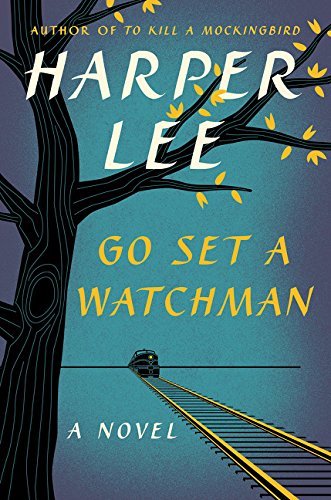
Go Set a Watchman: A Novel, by Harper Lee

Go Set a Watchman: A Novel, by Harper Lee


Go Set a Watchman: A Novel, by Harper Lee

Best Ebook PDF Online Go Set a Watchman: A Novel, by Harper Lee

From Harper Lee comes a landmark new novel set two decades after her beloved Pulitzer Prize–winning masterpiece, To Kill a Mockingbird.

Maycomb, Alabama. Twenty-six-year-old Jean Louise Finch—"Scout"—returns home from New York City to visit her aging father, Atticus. Set against the backdrop of the civil rights tensions and political turmoil that were transforming the South, Jean Louise's homecoming turns bittersweet when she learns disturbing truths about her close-knit family, the town, and the people dearest to her. Memories from her childhood flood back, and her values and assumptions are thrown into doubt. Featuring many of the iconic characters from To Kill a Mockingbird, Go Set a Watchman perfectly captures a young woman, and a world, in painful yet necessary transition out of the illusions of the past—a journey that can only be guided by one's own conscience.

Written in the mid-1950s, Go Set a Watchman imparts a fuller, richer understanding and appreciation of Harper Lee. Here is an unforgettable novel of wisdom, humanity, passion, humor, and effortless precision—a profoundly affecting work of art that is both wonderfully evocative of another era and relevant to our own times. It not only confirms the enduring brilliance of To Kill a Mockingbird, but also serves as its essential companion, adding depth, context, and new meaning to an American classic.

Go Set a Watchman: A Novel, by Harper Lee

  • Amazon Sales Rank: #1441 in Books
  • Brand: Lee, Harper
  • Published on: 2015-07-14
  • Released on: 2015-07-14
  • Format: Deckle Edge
  • Original language: English
  • Number of items: 1
  • Dimensions: 9.00" h x 1.04" w x 6.00" l, 1.41 pounds
  • Binding: Hardcover
  • 288 pages
Features
  • Last novel of Harper Lee written before To Kill a Mockingbird
Go Set a Watchman: A Novel, by Harper Lee

Review “Go Set a Watchman is such an important book, perhaps the most important novel on race to come out of the white South in decades… (New York Times Opinion Pages: Taking Note)“Watchman is compelling in its timeliness.” (Washington Post)“Go Set a Watchman provides valuable insight into the generous, complex mind of one of America’s most important authors.” (USA Today)“Harper Lee’s second novel sheds more light on our world than its predecessor did.” (Time)“[Go Set a Watchman] contains the familiar pleasures of Ms. Lee’s writing- the easy, drawling rhythms, the flashes of insouciant humor, the love of anecdote.” (Wall Street Journal)“…the voice we came to know so well in To Kill a Mockingbird - funny, ornery, rulebreaking - is right here in Go Set a Watchman, too, as exasperating and captivating as ever.” (Chicago Tribune)“Don’t let ‘Go Set a Watchman’ change the way you think about Atticus Finch…the hard truth is that a man such as Atticus, born barely a decade after Reconstruction to a family of Southern gentry, would have had a complicated and tortuous history with race.” (Los Angeles Times)“A significant aspect of this novel is that it asks us to see Atticus now not merely as a hero, a god, but as a flesh-and-blood man with shortcomings and moral failing, enabling us to see ourselves for all our complexities and contradictions.” (Washington Post)“The success of Go Set a Watchman... lies both in its depiction of Jean Louise reckoning with her father’s beliefs, and in the manner by which it integrates those beliefs into the Atticus we know.” (Time)“Go Set a Watchman’s greatest asset may be its role in sparking frank discussion about America’s woeful track record when it comes to racial equality.” (San Francisco Chronicle)“Go Set a Watchman comes to us at exactly the right moment. All important works of art do. They come when we don’t know how much we need them.” (Chicago Tribune)“What makes Go Set a Watchman memorable is its sophisticated and even prescient view of the long march for racial justice. Remarkably, a novel written that long ago has a lot to say about our current struggles with race and inequality.” (Chicago Tribune)“[Go Set a Watchman] captures some of the same small-town Southern humor and preoccupation with America’s great struggle: race.” (Columbus Dispatch)“Go Set a Watchman’s gorgeous opening is better than we could have expected.” (Vanity Fair)“Go Set a Watchman is more complex than Harper Lee’s original classic. A satisfying novel… it is, in most respects, a new work, and a pleasure, revelation and genuine literary event.” (The Guardian)“Lee’s ability with description is evident… with long sentences beautifully rendered and evoking a world long lost to history, but welcoming all the same.” (CNN.com)“A coming-of-age novel in which Scout becomes her own woman…Go Set a Watchman’s voice is beguiling and distinctive, and reminiscent of Mockingbird. (It) can’t be dismissed as literary scraps from Lee’s imagination. It has too much integrity for that.” (The Independent)“Atticus’ complexity makes Go Set a Watchman worth reading. With Mockingbird, Harper Lee made us question what we know and who we think we are. Go Set a Watchman continues in this noble literary tradition.” (New York Post)“A deftly written tale… there’s something undeniably comforting and familiar about sinking into Lee’s prose once again.” (People)“One overarching theme that many critics have zeroed in on is that there is a lot to learn from the novel, as both a writer and a reader.” (Vulture)“As Faulkner said, the only good stories are the ones about the human heart in conflict with itself. And that’s a pretty good summation of Go Set a Watchman.” (Daily Beast)“Go Set a Watchman offers a rich and complex story… To make the novel about pinning the right label on Atticus is to miss the point.” (Bloomberg View)“[Go Set a Watchman is a] brilliant book that ruthlessly examines race relations (Denver Post)“In this powerful newly published story about the Finch family, Lee presents a wider window into the white Southern heart, and tells us it is finally time for us all to shatter the false gods of the past and be free.” (NPR's "Code Switch")“[Go Set a Watchman is] filled with the evocative language, realistic dialogue and sense of place that partially explains what made Mockingbird so beloved.” (Buffalo News)

From the Back Cover

“Go Set a Watchman is such an important book, perhaps the most important novel on race to come out of the white South in decades.”—Clay Risen, New York Times

Maycomb, Alabama. Twenty-six-year-old Jean Louise Finch—“Scout”—returns home from New York City to visit her aging father, Atticus. Set against the backdrop of the civil rights tensions and political turmoil that were transforming the South, Jean Louise’s homecoming turns bittersweet when she learns disturbing truths about her close-knit family, the town, and the people dearest to her. Memories from her childhood flood back, and her values and assumptions are thrown into doubt. Featuring many of the iconic characters from To Kill a Mockingbird, Go Set a Watchman perfectly captures a young woman, and a world, in painful yet necessary transition out of the illusions of the past—a journey that can only be guided by one’s own conscience.

Written in the mid-1950s, Go Set a Watchman imparts a fuller, richer understanding and appreciation of Harper Lee. Here is an unforgettable novel of wisdom, humanity, passion, humor, and effortless precision—a profoundly affecting work of art that is both wonderfully evocative of another era and relevant to our own times. It not only confirms the enduring brilliance of To Kill a Mockingbird but also serves as its essential companion, adding depth, context, and new meaning to an American classic.

“Harper Lee’s second novel sheds more light on our world than its predecessor did.”—Time

“Provides valuable insight into the generous, complex mind of one of America’s most important authors.”—USA Today

About the Author

Harper Lee was born in 1926 in Monroeville, Alabama. She is the author of the acclaimed To Kill a Mockingbird and Go Set a Watchman, which became a phenomenal #1 New York Times bestseller when it was published in July 2015. Ms. Lee received the Pulitzer Prize, the Presidential Medal of Freedom, and numerous other literary awards and honors. She died on February 19, 2016.


Go Set a Watchman: A Novel, by Harper Lee

Where to Download Go Set a Watchman: A Novel, by Harper Lee

Most helpful customer reviews

1628 of 1759 people found the following review helpful. The most disappointing thing? I can't reject this By Arielle Davinger If "Go Set a Watchman" had been published before "To Kill a Mockingbird," it would have been meaningless. Tom Robinson's trial would be just a vague incident in the Jean Louise's memory instead of a culturally iconic scene. Atticus Finch would be his daughter's fallen hero, but not ours. If "Watchman" had been first, we would only know Atticus as a segregationist and we wouldn't care: he wouldn't have been an ethical role model and a hero. There would be references to Atticus's past and why Jean Louise's world is shaken when she finds out he is a segregationist, but we would not share them. Now, though, Jean Louise's (who I keep referring to as "Scout" out of habit) feelings of betrayal are our own, as we can see by the collective Internet outrage.That's why "Watchman" works; that's why I have to give it four stars. "Watchman" is about fallen idols and disillusionment. Jean Louise tries to reconcile how moral paragon Atticus Finch could be racist, and that's what the readers have been trying to reconcile, as well. The press release for "Watchman" said, "[Jean Louise Finch] is forced to grapple with issues both personal and political as she tries to understand her father's attitude toward society, and her own feelings about the place where she was born and spent her childhood," which gave us a hint that the Atticus we knew--the infallible anti-racist crusader--would not be that way in "Watchman." The talk about "Watchman" tarnishing Lee's legacy contributed to that idea. Still, I dismissed this possibility until it was confirmed, and even then, I was in denial. When Scout finds out Atticus is attending segregationist citizens' council meetings, she thinks "[He was] pulling something, [he was] there merely to keep an eye on things," a thought that I hopefully and childishly had, as well.But the most painful thing is that this Atticus is still recognizably, unquestionably Atticus Finch. Some speculated that this first draft Atticus would be different enough as a character (beyond the obvious) that we could easily dismiss him as Not Atticus and the book as Not Canon. He is still a loving father, a good neighbor, endlessly reasonable, thoughtful, articulate, patient, wry, giving. Still, his portrayal in "Watchman" makes me uneasy. JK Rowling could, conceivably, write a Harry Potter sequel set twenty, thirty years in the future, where Harry, an Auror, gleefully casts the Cruciatus Curse against suspected magical wrong-doers on a regular basis. Could she explain how he became this way as he grew older while making it consistent with his character from the first seven books? I think so, but I wouldn't want to read that.On the bright side, Jean Louise Finch serves as a moral compass. Atticus taught her well. She challenges beliefs that she knows are wrong. Of course, by today's standards, some of the things she says are cringeworthy, but the point is, she is now the progressive heroine. She is not perfect, but she has potential to be better than her father and her hometown. We have hope that she will pick up where Atticus failed. She is also recognizably Scout Finch, the outspoken, precocious tomboy, but now she is twenty-six and still out of place in Maycomb. Jean Louise has been living in New York City, which contributes to the jarringness of her visit. She can't relate to the women of her town, their interests, or their views on race. And, of course, Aunt Alexandra is still on her case about her behavior and appearance.Other familiar faces include Aunt Alexandra, Uncle Jack (who takes a much more prominent role), and Calpurnia. Scout mentions that she still keeps in touch with Dill, who is exploring Italy, last she checked. Next to Atticus, the most disappointing news is that Jem died before "Watchman" begins.Henry Clinton is an important new character. He has been close to the Finches since, well, after the events of "Mockingbird." He became Atticus's protege after Jem died. Jean Louise has a serious relationship with him at the beginning of the novel, but, like Atticus, he attends those awful citizens' council meetings, and her view of him is shaken.I wanted to hate this book, and I wanted to be angry at it. The controversy surrounding its release would be enough: the story behind its publication is shady, almost certainly achieved through underhanded means, and even buying the novel was a moral quandary. Unfortunately, the book is good, and its message--however painfully it hits--is important: heroes can fall and they should. Not only that, but it forces us to look at our own values and behaviors. Atticus Finch was a huge relief: a person, albeit fictional, that we could look up to. He embodied everything an ethical person should aspire to (at least, the memetic version of him did). Atticus became a literary saint.However, even "Mockingbird" shows cracks in the statue we've erected of Atticus Finch. He has always taken a paternalist stance towards black people, but the focus of "Mockingbird" was his fight for justice. His moving courtroom scene, his progressive parenting, and his countless other noble deeds overshadow small things like making Calpurnia enter through the back door. But this indicates that his conception of justice and equality is limited--not as limited as the rest of Maycomb, of course, but still limited--and that becomes the focal point of "Watchman." The hardest truth of "Watchman" is not that Atticus changed. It is that he was always like this. The question that Jean Louise/Scout and the readers have to answer is, What are we going to do to be better?

1296 of 1419 people found the following review helpful. but I loved this novel for exactly what it is By just another bookworm I came in skeptical, but I loved this novel for exactly what it is: a brilliantly written, beautiful southern novel about a young woman who discovers her father is not a god. And I'm angry that some pompous, patriarchal publisher squashed it and convinced her to write a brilliantly written, beautiful southern novel about a young woman who discovers her father is a god. WATCHMAN is about growing up, "killing the Buddha" and laying claim to one's own world view.I can certainly believe that this is Harper Lee's first novel. I totally understand why the editor buried it and encouraged her to bend her considerable talent to the concept of MOCKINGBIRD, latching onto a fairly insignificant anecdote and reframing it as the main plot thrust -- which also neatly swapped hero and heroine, making the star of the book a man instead of a young woman.Setting aside the suspicious circumstances of the magical appearance of WATCHMAN (and the buckets of money involved for the publisher and agent), I also totally get why Harper Lee might want us to have this novel now, at this point in her life. She is now where old Atticus is in WATCHMAN: an elderly person who is sick and tired of carrying the burden of our hero worship. So there. Take that. Eat your disillusionment and throw up behind the ice cream parlor that was once your childhood home. It hurts, and it infuriates, and it strips away your security blanket. Get over it.As an editor, I want to go back in time, embrace this young author, force her to firmly look in my eyes, and tell her: "This is a wonderful book. And you must write another one and another and another, and every one of them should say exactly what you want to say." Yes, I love MOCKINGBIRD as much as the next book nerd, but it breaks my heart that -- no matter what we know/don't know about the publishing process -- the publisher took hold of a young woman who had astonishing lyrical skills, massive raw talent, insight that transcended her years, and literary chops that set her on a trajectory to eclipse Faulkner, and they turned her into a one-hit wonder recluse who was unwilling or unable to ever publish another book.I love both Harper Lee's beautiful novels. I'm mourning for the dozen or so she could have and should have written.

766 of 841 people found the following review helpful. Powerful, challenging companion-piece to MOCKINGBIRD By Kathy Cunningham There's been a lot of controversy surrounding the publication of GO SET A WATCHMAN, which has been universally recognized as the first draft of what would eventually become Harper Lee's magnificent TO KILL A MOCKINGBIRD. WATCHMAN, written several years before MOCKINGBIRD, tells the story of 26-year-old Jean Louise Finch who returns to her childhood home of Maycomb, Alabama to visit her 72-year-old father, Atticus Finch. At first, the visit is bathed in the patina of memories and nostalgia - Jean Louise remembers the smells, the sounds, and the people she grew up with, and she resents the changes that have taken place (Atticus has left the house where Jean Louise was born and built himself a new place that doesn't quite feel the same). The first third of the novel is slow-paced and wistful, with Jean Louise flirting with childhood friend and maybe-fiancé, Hank Clinton, now her father's law partner. She spars with her Aunt Alexandra (who berates her for wearing "slacks" in town) and her Uncle Jack (whose conversation is steeped in metaphor and allusion). It isn't until she learns that Atticus and Hank are both part of the Maycomb County Citizen's Council, an organization bent on preventing racial integration, that the plot really begins. The Atticus we see here - a man determined to preserve the identity of a South torn asunder, first by emancipation and then by Supreme Court decisions - is not the Atticus Jean Louise remembers from her childhood. She thought of him as a God, and we who so loved both the book and movie versions of MOCKINGBIRD did, too. But WATCHMAN has a message that's far more complex than its more famous counterpart. Because Atticus is not a God. He's also not evil, even in his need to protect his world from the kind of change that cannot come easily. WATCHMAN isn't the uplifting, lovely novel that MOCKINGBIRD is. But in many ways, by being Jean Louise's story more than Atticus's, it's bigger and more important.From everything I've read, it's clear that Harper Lee never intended to publish WATCHMAN. She submitted it to publishers who suggested she rework it focusing on Jean Louise's childhood, and the result was MOCKINGBIRD. I can see why they gave Lee this advice - the childhood memories in WATCHMAN (and there are many) are among its most identifiable elements. We get to see Jean Louise again when she was Scout, and we get to see Jem and Dill in all their glory. There is a reference to the trial of Tom Robinson, which makes up the central conflict in MOCKINGBIRD. In WATCHMAN, however, Robinson is not named, he seems much younger (a boy), and his "rape" of a 14-year-old white girl is proven to have been consensual (yes, Atticus gets him off). Most of the rest of the stories and memories in WATCHMAN are new, covering Scout's school years (including high school, first dates, dances, and embarrassments). I loved her and Jem and Dill and young Hank (a character who does not show up in MOCKINGBIRD), and I would have read this for those sections alone.But this isn't a book about children. Instead, it's a book about change, and how difficult it is to get people to let go of their identities and move forward into the future, even if that future is necessary and right. The setting of WATCHMAN is the summer of 1954. The Supreme Court has just ruled (in Brown vs. the Board of Education) that "separate but equal" cannot stand - no longer would states be able to avoid racial integration by setting up separate schools for Negroes. Jean Louise believes in states' rights, so she isn't a fan of the Court's ruling (she believes it violates the 10th Amendment). But she does believe in racial equality and in integration, and she considers herself "color blind," things she believes she learned from her father. But when Atticus finally tells her what he believes - that neither Southern whites nor blacks are ready for forced integration, whether it be in the schools or the voting booth - it shakes her to her core. And the conversations she has with both Atticus and her Uncle Jack reveal a lot about how enlightened Southern white men thought in the 1950's. Parts of it are very hard to read, especially coming from the mouth of beloved Atticus Finch. But it's also a very honest portrayal of issues that are still front-and-center in American life and politics today.It's easy to say that the Atticus we meet in WATCHMAN isn't the same man as the kind, loving, God-like father in MOCKINGBIRD. Since seeing the 1962 movie, I've always heard Gregory Peck's voice when I've read Atticus's words - and that's exactly what I heard when I read WATCHMAN. This is Atticus, but a much older Atticus who is trying to protect the only world he's ever known. He has no hate in his heart for black people, and he truly does believe in equality (this is a man who waits in line behind black people in the grocery store even though the white store owner would happily serve him first). But he does call the Negro people "backward," and he compares them to children who are not ready to cast a vote or play a part in government. Atticus says to Jean Louise, "Do you want your children going to a school that's been dragged down to accommodate Negro children?" She is horrified, and she accuses him of denying that blacks are human. He calmly tells her that change can't be forced upon people until they're ready. It reminded me of a line from Lorraine Hansberry's 1959 play, "A Raisin in the Sun": Mr. Lindner, a white man trying to prevent a black family from moving into his white neighborhood, says, "You just can't force people to change their hearts." That's pretty much what Atticus is trying to tell Jean Louise.At the same time, Atticus recognizes in his daughter the very spirit and commitment that will ultimately bring the kind of change he knows must happen. She is a product of her upbringing - she was raised by a white man and a black woman (Calpurnia, who was Atticus's housekeeper since the death of his wife when Jean Louise was two). She is Atticus's daughter, in her beliefs, her humanity, and yes, in her color-blindness. And if she represents the changed world yet to come, Atticus represents a past which is so very hard to let go of.I did enjoy reading GO SET A WATCHMAN, and I do think it makes a nice companion piece to MOCKINGBIRD. The issues raised here are the kinds of things people should be thinking about and talking about. I'm very glad this novel was published. I highly recommend it to anyone willing to be challenged.

See all 10651 customer reviews... Go Set a Watchman: A Novel, by Harper Lee


Go Set a Watchman: A Novel, by Harper Lee PDF
Go Set a Watchman: A Novel, by Harper Lee iBooks
Go Set a Watchman: A Novel, by Harper Lee ePub
Go Set a Watchman: A Novel, by Harper Lee rtf
Go Set a Watchman: A Novel, by Harper Lee AZW
Go Set a Watchman: A Novel, by Harper Lee Kindle

Go Set a Watchman: A Novel, by Harper Lee

Go Set a Watchman: A Novel, by Harper Lee

Go Set a Watchman: A Novel, by Harper Lee

Sabtu, 05 November 2011

Complicated Spiders: Anti-Stress Coloring Book (Complicated Coloring), by Complicated Coloring

Complicated Spiders: Anti-Stress Coloring Book (Complicated Coloring), by Complicated Coloring

This is it the book Complicated Spiders: Anti-Stress Coloring Book (Complicated Coloring), By Complicated Coloring to be best seller recently. We offer you the best offer by getting the stunning book Complicated Spiders: Anti-Stress Coloring Book (Complicated Coloring), By Complicated Coloring in this website. This Complicated Spiders: Anti-Stress Coloring Book (Complicated Coloring), By Complicated Coloring will certainly not only be the sort of book that is hard to discover. In this website, all types of books are offered. You can search title by title, writer by writer, and also publisher by publisher to discover the most effective book Complicated Spiders: Anti-Stress Coloring Book (Complicated Coloring), By Complicated Coloring that you could check out now.

Complicated Spiders: Anti-Stress Coloring Book (Complicated Coloring), by Complicated Coloring

Complicated Spiders: Anti-Stress Coloring Book (Complicated Coloring), by Complicated Coloring


Complicated Spiders: Anti-Stress Coloring Book (Complicated Coloring), by Complicated Coloring

PDF Ebook Online Complicated Spiders: Anti-Stress Coloring Book (Complicated Coloring), by Complicated Coloring

Complicated Spider Coloring Book for non-arachnophobic, grown-ups and older children. Unusual spider designs covered with intricate patterns that will keep your hands and mind occupied for hours. Features: 25 Black line spiders on a black background:These take less time to complete and the black background really makes your colors stand out. 25 Grey line spiders on a grey web background:These take longer to finish, but you have the option of changing the line color and filling in the background. Each image is single sided with a dark spider web design on the reverse. Designs include: a Dragon Spider, a Robot Spider, a Fire Spider, an Angel Spider, a Turtle Spider and twenty more. Part of the Complicated Coloring series.

Complicated Spiders: Anti-Stress Coloring Book (Complicated Coloring), by Complicated Coloring

  • Amazon Sales Rank: #301723 in Books
  • Published on: 2015-07-09
  • Original language: English
  • Number of items: 1
  • Dimensions: 10.00" h x .24" w x 8.00" l, .49 pounds
  • Binding: Paperback
  • 104 pages
Complicated Spiders: Anti-Stress Coloring Book (Complicated Coloring), by Complicated Coloring


Complicated Spiders: Anti-Stress Coloring Book (Complicated Coloring), by Complicated Coloring

Where to Download Complicated Spiders: Anti-Stress Coloring Book (Complicated Coloring), by Complicated Coloring

Most helpful customer reviews

7 of 7 people found the following review helpful. This book has quickly become a favorite with my school aged grandsons! It is imaginative and artistic. By Jackie Cooper This is a wonderful, imaginative coloring book. The spiders are intricately adorned in a variety of patterns and each white page includes the spider’s web. A fun coloring book for adults and loved by my school aged grandsons this book quickly became a favorite at my house.This is the perfect coloring book to spend quality family time coloring with the school aged boys in your life. Coloring has a calming effect on children plus they use their own imagination and creativity.1. This unique coloring book is 8 inches wide x 9 inches high, it has 25 different illustrations of intricately adorned spiders; each illustration is printed in the book twice, one on a black background and the same illustration on a white background with light gray lines.2. Each image is printed one per page, the back of each page left blank.3. All markers bleed through the pages, I place a piece of paper under the page I am coloring on to prevent damage to the next page.

3 of 3 people found the following review helpful. A unique, imaginative book to color! Don't be afraid! By Judy Sarmiento If you're looking for something unique and fun to color, this could be the book for you! First of all, the book is of a very nice quality. The concept of having two versions of each picture to color is really neat. There's one with a black background, then the same piece is presented on a white background in gray tones, giving you all sorts of options to color. You could use pencil and cover over the gray lines, or go over (outline) the lines in black or any other color. So many possibilities for some really interesting finished pieces. Second, I think spiders are cool, and I love the really varied and unique drawings in this book. There are scary spiders, a dragon spider, even a flowery spider! This artist has a lot to offer with these imaginative, detailed drawings!

2 of 2 people found the following review helpful. Not as much variety as I'd hoped. By Karen Gory I misunderstood the description of this book... I was hoping that the spiders on a black background would have white webs that I could colour, since the cover shows a nice white web on a black background but they are on a plain black page - the only webs are the grey ones on the WHITE pages... and the spiders are all spread-eagled in the same traditional 'spider' posture in the middle of the page, which leads to them all looking very much the same even though they have entirely different decorations on them. That was a little disappointing... but if you like creepy crawlies you'll love this book. I'm saving my copy for Halloween decorating.

See all 11 customer reviews... Complicated Spiders: Anti-Stress Coloring Book (Complicated Coloring), by Complicated Coloring


Complicated Spiders: Anti-Stress Coloring Book (Complicated Coloring), by Complicated Coloring PDF
Complicated Spiders: Anti-Stress Coloring Book (Complicated Coloring), by Complicated Coloring iBooks
Complicated Spiders: Anti-Stress Coloring Book (Complicated Coloring), by Complicated Coloring ePub
Complicated Spiders: Anti-Stress Coloring Book (Complicated Coloring), by Complicated Coloring rtf
Complicated Spiders: Anti-Stress Coloring Book (Complicated Coloring), by Complicated Coloring AZW
Complicated Spiders: Anti-Stress Coloring Book (Complicated Coloring), by Complicated Coloring Kindle

Complicated Spiders: Anti-Stress Coloring Book (Complicated Coloring), by Complicated Coloring

Complicated Spiders: Anti-Stress Coloring Book (Complicated Coloring), by Complicated Coloring

Complicated Spiders: Anti-Stress Coloring Book (Complicated Coloring), by Complicated Coloring

Rabu, 02 November 2011

Oreo (New Directions Paperbook), by Fran Ross

Oreo (New Directions Paperbook), by Fran Ross

Some individuals could be giggling when considering you reading Oreo (New Directions Paperbook), By Fran Ross in your extra time. Some may be appreciated of you. And also some may want be like you who have reading hobby. Exactly what about your own feel? Have you felt right? Reviewing Oreo (New Directions Paperbook), By Fran Ross is a need and also a pastime at once. This condition is the on that will certainly make you really feel that you have to review. If you understand are trying to find the book entitled Oreo (New Directions Paperbook), By Fran Ross as the selection of reading, you could discover here.

Oreo (New Directions Paperbook), by Fran Ross

Oreo (New Directions Paperbook), by Fran Ross


Oreo (New Directions Paperbook), by Fran Ross

Free PDF Ebook Oreo (New Directions Paperbook), by Fran Ross

A pioneering, dazzling satire about a biracial black girl from Philadelphia searching for her Jewish father in New York City

Oreo is raised by her maternal grandparents in Philadelphia. Her black mother tours with a theatrical troupe, and her Jewish deadbeat dad disappeared when she was an infant, leaving behind a mysterious note that triggers her quest to find him. What ensues is a playful, modernized parody of the classical odyssey of Theseus with a feminist twist, immersed in seventies pop culture, and mixing standard English, black vernacular, and Yiddish with wisecracking aplomb. Oreo, our young hero, navigates the labyrinth of sound studios and brothels and subway tunnels in Manhattan, seeking to claim her birthright while unwittingly experiencing and triggering a mythic journey of self-discovery like no other.

Oreo (New Directions Paperbook), by Fran Ross

  • Amazon Sales Rank: #39015 in Books
  • Brand: Ross, Fran/ Senna, Danzy (INT)/ Mullen, Harryette (AFT)
  • Published on: 2015-07-07
  • Released on: 2015-07-07
  • Original language: English
  • Number of items: 1
  • Dimensions: 8.00" h x .80" w x 5.60" l, .0 pounds
  • Binding: Paperback
  • 240 pages
Oreo (New Directions Paperbook), by Fran Ross

Review “A brilliant and biting satire, a feminist picaresque, absurd, unsettling, and hilarious ... Ross' novel, with its Joycean language games and keen social critique, is as playful as it is profound. Criminally overlooked. A knockout.” (Kirkus (Starred Review))“Oreo is one of the funniest books I've ever read. To convey Oreo's humor effectively, I would have to use the comedic graphs, menus, and quizzes Ross uses in the novel. So instead, I just settle for, 'You have to read this.'” (Mat Johnson - NPR Books)“With its mix of vernacular dialects, bilingual and ethnic humor, inside jokes, neologisms, verbal quirks, and linguistic oddities, Ross's novel dazzles…” (Harryette Mullen)“It took me two years to "feel" Wu Tang's first album, even longer to appreciate Basquiat, and I still don't get all the fuss over Duke Ellington and Frank Lloyd Wright. But I couldn't believe Oreo hadn't been on my cultural radar.” (Paul Beatty - The New York Times)“Hilarious, touching and a future classic.” (Vanity Fair)“Think: Thomas Pynchon meets Don Quixote, mixed with a crack joke crafter. I'm not sure I've ever admired a book's inventiveness and soul more.” (John Warner - Chicago Tribune)“The novel will endure, greeting each new generation of readers with its continuing relevance.” (Amanda Sarasien - The Literary Review)“Hilariously offbeat. ” (Essence Magazine)“This is a novel that refuses to be categorized or tamed in any way.” (Bookforum)“Oreo has snap and whimsy to burn. It’s a nonstop outbound flight to a certain kind of readerly bliss. It may have been first published more than 40 years ago, but its time is now.” (Dwight Garner - The New York Times)“Uproariously funny…criminally neglected.” (Stephen Sparks - LitHub)“This novel has wings.” (Dwight Garner - The New York Times)

About the Author Fran Ross (1935–1985) grew up in Philadelphia. She wrote Oreo while working as a proofreader and journalist, and then moved to Los Angeles to write for Richard Pryor.Danzy Senna is the author of several books, including the award-winning novel Caucasia.Harryette Mullen, a professor of English at UCLA, is the author of six collections of poetry, most recently Recyclopedia, which won a PEN Beyond Margins Award


Oreo (New Directions Paperbook), by Fran Ross

Where to Download Oreo (New Directions Paperbook), by Fran Ross

Most helpful customer reviews

17 of 17 people found the following review helpful. Overlooked mulilinguistic odyssey By Paul Goble Oreo is the name of a brilliant black-and-Jewish girl who sets out in search of her father. The story is an absurd picaresque quest, overtly paralelling the journey of the Greek hero Theseus.Oreo isn't for everyone. You'll enjoy Oreo if you like puns, enjoy linguistics, appreciate mythological allusions, or like thinking about the sociology and history of racism in America.The writing is full of multilingual puns and linguistic twists. I constantly felt that I might be missing some of the jokes due to ignorance of one or another language. To catch everything, one would need to know English, Black Vernacular English ("Jive"), Yiddish, German, French, Italian, and who knows what else. For example, one character in the book speaks entirely in English words, but used translated French idioms. Another typical example: a shopkeeper tucked his hands next to his "stove-bellied pot." Even Oreo's last name is a pun: Schwartz (German and Yiddish for "black"). Occasionally the writing snaps into the author's voice and becomes explicitly self-conscious.I enjoyed the variety of mental practices exercised by the characters--"head equations," rationalizations, and observation games to pass the time.Suggestions for readers: Do keep a Yiddish dictionary nearby (The Joys of Yiddish by Leo Rosten was a good choice for me). Do review the story of the journey of Theseus (see Wikipedia or the author's key at the back of Oreo). Do not read the foreword before you read the book.The foreword (2000 printing, by Harryette Mullen) seems deliberately designed to suck the life out of the text. It's wordy, more analytical than insightful, and contains spoilers.I discovered Oreo through a 2011 review on NPR, which proclaimed it ahead of its time and one of the funniest works ever written. I agree that it's funny, but not that funny. I downgraded my rating due to one chapter of explicit pornography which added little to the story.

13 of 14 people found the following review helpful. Great rediscovery By Avals Sher It's great that the book is being reissued. It's as timely now as it was in 1974. The coming of age story of a daughter looking for her father in New York is timeless and written in such humorous way that it's no surprise that the author was writing for Richard Pryor. The novel is also one of the food novels that makes one forget when it was originally written given popularity of the genre today. The author loves the English language and so it's a pleasure to read. It's sad that the author only published this one novel and died in 1985 at age 50.

15 of 18 people found the following review helpful. Why has this not been on everyone's top ten list for decades? By Su Friedrich It's brilliant! So witty, erudite, original...I don't want to keep adding superlatives. Suffice it to say that it's delightful to read and a major addition to the field. Or was, and then was lost, and thankfully has now been reprinted so all of us can experience it.

See all 37 customer reviews... Oreo (New Directions Paperbook), by Fran Ross


Oreo (New Directions Paperbook), by Fran Ross PDF
Oreo (New Directions Paperbook), by Fran Ross iBooks
Oreo (New Directions Paperbook), by Fran Ross ePub
Oreo (New Directions Paperbook), by Fran Ross rtf
Oreo (New Directions Paperbook), by Fran Ross AZW
Oreo (New Directions Paperbook), by Fran Ross Kindle

Oreo (New Directions Paperbook), by Fran Ross

Oreo (New Directions Paperbook), by Fran Ross

Oreo (New Directions Paperbook), by Fran Ross

Sabtu, 29 Oktober 2011

Bending Steel: Modernity and the American Superhero, by Aldo J. Regalado

Bending Steel: Modernity and the American Superhero, by Aldo J. Regalado

To obtain this book Bending Steel: Modernity And The American Superhero, By Aldo J. Regalado, you could not be so confused. This is online book Bending Steel: Modernity And The American Superhero, By Aldo J. Regalado that can be taken its soft documents. It is different with the on the internet book Bending Steel: Modernity And The American Superhero, By Aldo J. Regalado where you can purchase a book and then the vendor will send out the printed book for you. This is the place where you can get this Bending Steel: Modernity And The American Superhero, By Aldo J. Regalado by online as well as after having deal with purchasing, you can download and install Bending Steel: Modernity And The American Superhero, By Aldo J. Regalado alone.

Bending Steel: Modernity and the American Superhero, by Aldo J. Regalado

Bending Steel: Modernity and the American Superhero, by Aldo J. Regalado


Bending Steel: Modernity and the American Superhero, by Aldo J. Regalado

Download Ebook PDF Online Bending Steel: Modernity and the American Superhero, by Aldo J. Regalado

“Faster than a speeding bullet. More powerful than a locomotive. Able to leap tall buildings in a single bound . . . It’s Superman!” Bending Steel examines the historical origins and cultural significance of Superman and his fellow American crusaders. Cultural historian Aldo J. Regalado asserts that the superhero seems a direct response to modernity, often fighting the interrelated processes of industrialization, urbanization, immigration, and capitalism that transformed the United States from the early nineteenth century to the present. Reeling from these exciting but rapid and destabilizing forces, Americans turned to heroic fiction as a means of explaining national and personal identities to themselves and to the world. In so doing, they created characters and stories that sometimes affirmed, but other times subverted conventional notions of race, class, gender, and nationalism.

The cultural conversation articulated through the nation’s early heroic fiction eventually led to a new heroic type―the brightly clad, super-powered, pro-social action heroes that first appeared in American comic books starting in the late 1930s. Although indelibly shaped by the Great Depression and World War II sensibilities of the second-generation immigrants most responsible for their creation, comic book superheroes remain a mainstay of American popular culture.

Tracing superhero fiction all the way back to the nineteenth century, Regalado firmly bases his analysis of dime novels, pulp fiction, and comics in historical, biographical, and reader response sources. He explores the roles played by creators, producers, and consumers in crafting superhero fiction, ultimately concluding that these narratives are essential for understanding vital trajectories in American culture.

Bending Steel: Modernity and the American Superhero, by Aldo J. Regalado

  • Amazon Sales Rank: #386988 in Books
  • Published on: 2015-07-16
  • Original language: English
  • Number of items: 1
  • Dimensions: 9.02" h x .81" w x 5.98" l, .0 pounds
  • Binding: Hardcover
  • 288 pages
Bending Steel: Modernity and the American Superhero, by Aldo J. Regalado

Review

“Aldo Regalado offers fresh insight into the origins of the American superhero. In particular he traces how the interconnected racial and gendered concerns embodied in superheroes played out in the early years of comic books. The depth of scholarship and the quality of writing are top notch and this will be a go-to work for scholars in the field.”

―Ian Gordon, associate professor of history at the National University of Singapore, author of Comic Strips and Consumer Culture, and coeditor of Film and Comic Books (University Press of Mississippi)

“Much discussion of the superhero figure focuses on what superheroes are, who wrote, drew, published, and read them, when and where, and even how the market, legal, and cultural conditions of the New York publishing world laid the groundwork for the creation of the superhero genre, but rarely do scholars address the most difficult question of why the superhero arose specifically in late Depression-era urban America. Regalado’s answer―a response to modernism and the superhero’s ongoing engagement with the changing nature of modernism and postmodernism in America―presents a cogent, deeply sensible, and convincing answer. Regalado takes into account consumers, creators, and producers of superhero comics and the conversation between them that shaped the genre’s ongoing response to modernism and its changes and discontents. This work is ever sensitive to the humanity, needs, drives, and concerns of those involved in the production and consumption of superhero narratives.”

―Peter Coogan, director of internal operations, Institute for Comics Studies

About the Author

Aldo J. Regalado, Homestead, Florida, is a teacher of history and American studies at Palmer Trinity School, an adjunct lecturer through the American Studies Program at the University of Miami, and an adjunct lecturer in US history at Florida International University.


Bending Steel: Modernity and the American Superhero, by Aldo J. Regalado

Where to Download Bending Steel: Modernity and the American Superhero, by Aldo J. Regalado

Most helpful customer reviews

2 of 2 people found the following review helpful. some familiar segments, but focus on modernity is insightful, other strong sections. Well recommended By B. Capossere Bending Steel: Modernity and the American Superhero, by Aldo J. Regaldo, is another entry in the getting-crowded field of cultural analysis of superheroes/comics. I can’t say Regaldo offers a lot that is new here, especially in some of the examinations of specific well-plumbed comics, but Bending Steel still has a lot to offer as it is a well-organized, clearly and often sharply written exploration of the topic with lucid, thoughtful points well supported by frequent concrete examples.The focus, as the title states, is on “modernity” and what the superhero genre tells us about the cultural response to it. He opens by defining his terms, with modernity described as “the allegedly more liberalizing arrangements that found expression through rationalism, capitalism, representative government, technological innovation, industrialization, urbanization, immigration, and the rise of modern societies.” This was, as he says, a lengthy process, and his book is organized around its various changing phases:• Market Modernity: the rapid development that occurred during the nineteenth century• Industrial Modernity: which saw its fullest expression in the years leading to WWII• Atomic Modernity: modernity’s suburban, Cold War phase• Postmodernity: the period from 1980 to the presentWhile the superhero as we think of him/her did not arise until the Industrial stage, when Superman leapt onto the stage of Action Comics, Regaldo sees the nineteenth century’s “heroic fiction,” as exemplified particularly by James Fennimore Cooper’s Natty Bumpo, as an important precursor stage, both for how they helped define the contours of modernity but also helped set the boundaries for later heroic fiction, including the genre spawned by Superman:The Man of Tomorrow began his career confined in a cultural cage forged from the stuff of nineteenth and early twentieth-century heroic archetypes, and ideologies regarding race, class, gender, and nationalism are counted among its bars.If Superman, however, was born in a cage formed of the prior century’s worldview, Regaldo is quick to point out that it is difficult, as many a villain has learned, to keep a good superhero down:Superman, however, was originally imagined by young men who stood at the margins of society. Consequently, he struggles against his cultural confines, promising to overcome them just has he bends steel with his bare handsThis sense of a push-pull appears regularly throughout Regaldo’s exploration. For instance, in his first section, he contrasts Cooper’s “triumphalist” views of heroism and modernity with those of writers working the American Gothic form, who suggest that the nation was doomed as a consequence of the violence and corruption that accompanied slavery, westward expansion and other unsavory aspects of America’s modern enterprise. He points as well to the increasing popularity of dime novel writers, who created working-class heroes that openly challenged the legitimacy of elites.Most authors who look into the superhero antecedents begin with the pulp heroes such as Doc Savage and The Shadow, so it was a bit refreshing to have Regaldo not only go back further in time but also explore the impact of literary fiction, which far too often is treated as if it was wholly separate from the hero/superhero world (even today). And while Natty Bumpo seems a relatively direct connection in terms of heroism and “derring-do,” I found Regaldo’s analysis of the American Gothic’s (particularly Poe’s) conflicting narrative (especially on masculinity) and the impact of the dime novels such as Deadwood Dick with their focus on working class views newly insightful.In section two, dealing with Industrial Modernity, Regaldo focuses his attention of Edgar Rice Burroughs’ John Carter and Tarzan characters, both of whom presented an imaginative escape from modern urban society . . . a rejection of cities, technology, bureaucracy, and business culture, as well as a celebration of white, male Anglo-Saxonism over ‘others’ defined by gender, class, race, and ethnicity. Lovecraft is another focus of this segment, a contrasting one as he views modernity through a different prism, though like Burroughs he too is blinkered by his racist views (some of the quotes will make you want to shower)The superhero proper makes his/her appearance in chapters three and four as Regaldo covers the cultural transition to heroes like Superman, Wonder Woman, and others who tackled modernity head on … accepting the city as a reality of modern life and treating the industrial landscape as a space to play in and triumph over. One of the big shifts here as well was in the creators, who came no of different immigrant and ethnic backgrounds (especially Jewish at this point), which as Regaldo points out, informed the ways they engaged the use of race in crafting heroic identities. He doesn’t exaggerate this broadening, however, explaining how whiteness remained operative in superhero fiction … failing to bend the bars that confined women in cages of sexism and objectification.Here is where we start to move into well-traveled territory, and while Regaldo’s cultural analysis is always incisive, much of the base information, such as how Superman was created, will be pretty familiar to those with more than a passing knowledge of comics history. The same is true of some of the more basic analysis, such as idea of Superman as an “immigrant” or the contrasts between Superman and Batman.Chapter Five covers the anti-comics crusade, rooted in the ethos of an atomic modernity in which the suburban home was thought of as a vanguard against internal and external threats. Here, Regaldo I thought does an excellent job in not simply covering the crusade itself, but offering up perhaps the most balanced presentation of the face of that crusade, Fredric Werther, that I’ve ever seen. Too often presented as a near-caricature of villainy, prudishness, and conservative paranoia, here Regaldo begins by making clear that Werther came out of a very socially liberal mindset, detailing for instance his career-long stance against racism not just in the arts but in real life, as when he used his own money to fund a affordable clinic in Harlem. I greatly appreciated this more full view of Werther, even if some of his well-known attacks on comics, such as the homoerotic influence of Batman/Robin on children, remain so laughably over the top from our modern sensibility. This chapter, even if moving through well-covered ground, is nicely detailed, offering up a slew of quotations rather than putting words in critics’ mouths. He also does a nice job of detailing the impact of the anti-comic crusade beyond the obvious imposition of the Comics Code.The big shift in the 1960’s led by Marvel’s introduction of not just a new cast of superheroes but a whole new type and style, one which captured the alienation that Americans felt in Cold War America [and] responded to the countercultural movements of the 1960s, is the focus of chapter six. Although again, Regaldo doesn’t exaggerate this more “transgressive” kind of superhero, acknowledging that Marvel’s corporate/business needs allowed them to only go so far so as not to offend the market. Toward the end of this chapter, he examines how Marvel’s wholly different type of superhero itself evolved into a superhero with a postmodern sensibility characterized by fluidity, plasticity, alienation, freedom, and a free reign of possibility . . . [and] increasingly cynical … expressing disgust and disdain for the meta-narratives of American society. Here is brings in Alan Moore and David Gibson’s Watchmen (how could he not?) and Frank Miller, particularly The Dark Knight Returns. Once again, I can’t say there is a lot new here in this section, from Stan Lee’s early influence in the creation of The Fantastic Four, The Hulk, Spider Man and their accordant contrast to earlier heroes to Moore’s deconstruction of the genre. But if there’s nothing new (and to be fair, it would be tough to add much new to ground that has been so stomped over), it is all handled quickly, efficiently, and clearly, and the points and connection being made are hard to argue with. The most original section in here, and my favorite details, involve an examination of the shifting presentation of the Black Panther and how those shifts mirror what is happening in the wider culture with regard to race.Regaldo closes with some reference to the explosion of superhero-related media, but doesn’t go into much detail, which is too bad as based on the clarity and insight of the book, I would have liked to have seen him tackle film and games in much more detail in terms of what they say about the post-post modern sensibility. But perhaps that’s for another book. This one, however, serves just fine and makes for an easy recommendation.(originally appeared on fantasyliterature.com)

0 of 0 people found the following review helpful. Five Stars By jojo Fine product and quick delivery

See all 2 customer reviews... Bending Steel: Modernity and the American Superhero, by Aldo J. Regalado


Bending Steel: Modernity and the American Superhero, by Aldo J. Regalado PDF
Bending Steel: Modernity and the American Superhero, by Aldo J. Regalado iBooks
Bending Steel: Modernity and the American Superhero, by Aldo J. Regalado ePub
Bending Steel: Modernity and the American Superhero, by Aldo J. Regalado rtf
Bending Steel: Modernity and the American Superhero, by Aldo J. Regalado AZW
Bending Steel: Modernity and the American Superhero, by Aldo J. Regalado Kindle

Bending Steel: Modernity and the American Superhero, by Aldo J. Regalado

Bending Steel: Modernity and the American Superhero, by Aldo J. Regalado

Bending Steel: Modernity and the American Superhero, by Aldo J. Regalado

Rabu, 26 Oktober 2011

Cracking the Coding Interview, 6th Edition: 189 Programming Questions and Solutions,

Cracking the Coding Interview, 6th Edition: 189 Programming Questions and Solutions, by Gayle Laakmann McDowell

You could conserve the soft data of this publication Cracking The Coding Interview, 6th Edition: 189 Programming Questions And Solutions, By Gayle Laakmann McDowell It will rely on your leisure as well as tasks to open as well as read this e-book Cracking The Coding Interview, 6th Edition: 189 Programming Questions And Solutions, By Gayle Laakmann McDowell soft file. So, you may not hesitate to bring this book Cracking The Coding Interview, 6th Edition: 189 Programming Questions And Solutions, By Gayle Laakmann McDowell everywhere you go. Just include this sot file to your gizmo or computer system disk to allow you review whenever and all over you have time.

Cracking the Coding Interview, 6th Edition: 189 Programming Questions and Solutions, by Gayle Laakmann McDowell

Cracking the Coding Interview, 6th Edition: 189 Programming Questions and Solutions, by Gayle Laakmann McDowell


Cracking the Coding Interview, 6th Edition: 189 Programming Questions and Solutions, by Gayle Laakmann McDowell

Free Ebook PDF Online Cracking the Coding Interview, 6th Edition: 189 Programming Questions and Solutions, by Gayle Laakmann McDowell

I am not a recruiter. I am a software engineer. And as such, I know what it's like to be asked to whip up brilliant algorithms on the spot and then write flawless code on a whiteboard. I've been through this as a candidate and as an interviewer. Cracking the Coding Interview, 6th Edition is here to help you through this process, teaching you what you need to know and enabling you to perform at your very best. I've coached and interviewed hundreds of software engineers. The result is this book. Learn how to uncover the hints and hidden details in a question, discover how to break down a problem into manageable chunks, develop techniques to unstick yourself when stuck, learn (or re-learn) core computer science concepts, and practice on 189 interview questions and solutions. These interview questions are real; they are not pulled out of computer science textbooks. They reflect what's truly being asked at the top companies, so that you can be as prepared as possible. WHAT'S INSIDE?

  • 189 programming interview questions, ranging from the basics to the trickiest algorithm problems.
  • A walk-through of how to derive each solution, so that you can learn how to get there yourself.
  • Hints on how to solve each of the 189 questions, just like what you would get in a real interview.
  • Five proven strategies to tackle algorithm questions, so that you can solve questions you haven't seen.
  • Extensive coverage of essential topics, such as big O time, data structures, and core algorithms.
  • A behind the scenes look at how top companies like Google and Facebook hire developers.
  • Techniques to prepare for and ace the soft side of the interview: behavioral questions.
  • For interviewers and companies: details on what makes a good interview question and hiring process.

Cracking the Coding Interview, 6th Edition: 189 Programming Questions and Solutions, by Gayle Laakmann McDowell

  • Amazon Sales Rank: #307 in Books
  • Published on: 2015-07-01
  • Released on: 2015-07-01
  • Original language: English
  • Number of items: 1
  • Dimensions: 10.00" h x 1.59" w x 7.00" l, 2.65 pounds
  • Binding: Paperback
  • 687 pages
Cracking the Coding Interview, 6th Edition: 189 Programming Questions and Solutions, by Gayle Laakmann McDowell

About the Author Gayle Laakmann McDowell is the founder and CEO of CareerCup and the author of Cracking the PM Interview and Cracking the Tech Career. Her background is in software development. She has worked as a software engineer at Google, Microsoft, and Apple. At Google, she interviewed hundreds of software engineers and evaluated thousands of hiring packets on the hiring committee. She holds a B.S.E. and M.S.E. in computer science from the University of Pennsylvania and an MBA from the Wharton School. She now consults with tech companies to improve their hiring process and with startups to prepare them for acquisition interviews.


Cracking the Coding Interview, 6th Edition: 189 Programming Questions and Solutions, by Gayle Laakmann McDowell

Where to Download Cracking the Coding Interview, 6th Edition: 189 Programming Questions and Solutions, by Gayle Laakmann McDowell

Most helpful customer reviews

29 of 30 people found the following review helpful. If you only want to use one book, this is it By David C. This is obviously the must-have book to prepare for your SWE/SDE interview. I have some small quibbles with how some of the problems were worded, but the level of difficulty is very representative of what the big tech companies are using. You might even run into these questions in your own interviews since Gayle is choosing questions that are popular among interviewers today. If you have time, you should of course pick up an algorithms textbook also. I recommend Skiena's The Algorithm Design Manual and Sedgewick's Algorithms (4th Edition) textbooks. The classic Cormen is too verbose and proof-heavy for the purposes of preparing for an interview.The DP solutions in this book are not actually tabular DP formulations--I recommend looking at the problems here http://people.cs.clemson.edu/~bcdean/dp_practice/ (Brian Dean's Dynamic Programming Practice Problems). Gayle presents memoized solutions, which are much easier conceptually but not as clean or performant as bottoms-up tabular solutions.

36 of 39 people found the following review helpful. Great but needs a kindle/ebook format By mtn rider This book helped me land a job at well known internet company. I got several offers and without doubt this book helped. The specific coding questions that I would have failed outright on had I not read the book include: breadth first search/shortest path, fundamentals of hash tables, and recursion (fibonacci). Before reading this book I thought I understood recursion but there's a lot I hadn't considered. I worked through many of the code exercises and would review some of the chapters before interviews, including big-O. There are some areas that I feel deserve more attention, like heaps, but overall it covers most of the fundamentals. There are some typos which I found annoying.The only reason I can't give 5 stars is this should be available in a ebook format. I don't buy physical books anymore since it's just a pain to lug around/store and as a result, they are often forgotten. And I've loaned this book to so many people they're really losing money buy not offering it on Kindle, which I would not be able to share.

6 of 6 people found the following review helpful. Nice but could improve little more By shawnkoon Pretty Great book. However, I wish There was more explanation for each problems instead of just giving us their solution. I think I would learn better if they made me understand what the question was actually asking instead of trying to figure out what question is actually asking by looking at the solution first.. However, The book itself contains a lot of information

See all 181 customer reviews... Cracking the Coding Interview, 6th Edition: 189 Programming Questions and Solutions, by Gayle Laakmann McDowell


Cracking the Coding Interview, 6th Edition: 189 Programming Questions and Solutions, by Gayle Laakmann McDowell PDF
Cracking the Coding Interview, 6th Edition: 189 Programming Questions and Solutions, by Gayle Laakmann McDowell iBooks
Cracking the Coding Interview, 6th Edition: 189 Programming Questions and Solutions, by Gayle Laakmann McDowell ePub
Cracking the Coding Interview, 6th Edition: 189 Programming Questions and Solutions, by Gayle Laakmann McDowell rtf
Cracking the Coding Interview, 6th Edition: 189 Programming Questions and Solutions, by Gayle Laakmann McDowell AZW
Cracking the Coding Interview, 6th Edition: 189 Programming Questions and Solutions, by Gayle Laakmann McDowell Kindle

Cracking the Coding Interview, 6th Edition: 189 Programming Questions and Solutions, by Gayle Laakmann McDowell

Cracking the Coding Interview, 6th Edition: 189 Programming Questions and Solutions, by Gayle Laakmann McDowell

Cracking the Coding Interview, 6th Edition: 189 Programming Questions and Solutions, by Gayle Laakmann McDowell

Tumours of the Skull Base and Paranasal Sinuses (Head and Neck Cancer Clinics)From Springer

Tumours of the Skull Base and Paranasal Sinuses (Head and Neck Cancer Clinics)From Springer

Tumours Of The Skull Base And Paranasal Sinuses (Head And Neck Cancer Clinics)From Springer. Let's review! We will often learn this sentence all over. When still being a youngster, mama made use of to order us to constantly review, so did the educator. Some books Tumours Of The Skull Base And Paranasal Sinuses (Head And Neck Cancer Clinics)From Springer are totally reviewed in a week and we require the commitment to assist reading Tumours Of The Skull Base And Paranasal Sinuses (Head And Neck Cancer Clinics)From Springer Just what about now? Do you still enjoy reading? Is checking out just for you that have responsibility? Definitely not! We below provide you a new book entitled Tumours Of The Skull Base And Paranasal Sinuses (Head And Neck Cancer Clinics)From Springer to read.

Tumours of the Skull Base and Paranasal Sinuses (Head and Neck Cancer Clinics)From Springer

Tumours of the Skull Base and Paranasal Sinuses (Head and Neck Cancer Clinics)From Springer


Tumours of the Skull Base and Paranasal Sinuses (Head and Neck Cancer Clinics)From Springer

PDF Ebook Tumours of the Skull Base and Paranasal Sinuses (Head and Neck Cancer Clinics)From Springer

Recent developments in our understanding of the complex anatomy of the cranial base and the biological behaviour of tumours in this area have significantly improved the outcome of patients with skull base tumours. The contributors present a systemic introduction and summary of contemporary knowledge in skull base surgery. The book has three major parts: (i) clinical, pathological and radiological management of patients, (ii) open and endoscopic surgical approaches to the skull base, and (iii) outcome, morbidity and postoperative follow-up of patients. The book is meant for medical students, residents and consultants in various disciplines, including otolaryngology, head and neck surgery, neurosurgery, plastic surgery, maxillofacial surgery and oncology. The emphasis is on the clinical approach to the patient rather than on surgical techniques per se.

Tumours of the Skull Base and Paranasal Sinuses (Head and Neck Cancer Clinics)From Springer

  • Published on: 2015-10-21
  • Original language: English
  • Number of items: 1
  • Dimensions: 9.52" h x .64" w x 6.22" l, 1.15 pounds
  • Binding: Hardcover
  • 175 pages
Tumours of the Skull Base and Paranasal Sinuses (Head and Neck Cancer Clinics)From Springer

Review

ZIL GIL is the Director of the Head and Neck Surgery Unit and the Laboratory for Applied Cancer Research at the Tel Aviv Medical Center, Tel Aviv University, Israel.  

DAN M. FLISS is the Chairman of the Department of Otolaryngology, Head and Neck and Maxillofacial Surgery at the Tel Aviv Medical Center, Tel Aviv University, Israel.  

From the Back Cover

Recent developments in our understanding of the complex anatomy of the cranial base and the biological behaviour of tumours in this area have significantly improved the outcome of patients with skull base tumours. The contributors present a systemic introduction and summary of contemporary knowledge in skull base surgery. The book has three major parts: (i) clinical, pathological and radiological management of patients, (ii) open and endoscopic surgical approaches to the skull base, and (iii) outcome, morbidity and postoperative follow-up of patients. The book is meant for medical students, residents and consultants in various disciplines, including otolaryngology, head and neck surgery, neurosurgery, plastic surgery, maxillofacial surgery and oncology. The emphasis is on the clinical approach to the patient rather than on surgical techniques per se.


About the Author

ZIL GIL is the Director of the Head and Neck Surgery Unit and the Laboratory for Applied Cancer Research at the Tel Aviv Medical Center, Tel Aviv University, Israel.  

DAN M. FLISS is the Chairman of the Department of Otolaryngology, Head and Neck and Maxillofacial Surgery at the Tel Aviv Medical Center, Tel Aviv University, Israel.  


Tumours of the Skull Base and Paranasal Sinuses (Head and Neck Cancer Clinics)From Springer

Where to Download Tumours of the Skull Base and Paranasal Sinuses (Head and Neck Cancer Clinics)From Springer

Most helpful customer reviews

1 of 1 people found the following review helpful. Excellent resource well organized By Dr. Bino I used this to study for my exams, well-organized with concise and in-depth reviews as necessary. Excellent review of both open and endoscopic skull base surgical techniques, pathology and management of cases. Very comprehensive, readable, and good for review of a very intense and sometimes diffcult topic.

See all 1 customer reviews... Tumours of the Skull Base and Paranasal Sinuses (Head and Neck Cancer Clinics)From Springer


Tumours of the Skull Base and Paranasal Sinuses (Head and Neck Cancer Clinics)From Springer PDF
Tumours of the Skull Base and Paranasal Sinuses (Head and Neck Cancer Clinics)From Springer iBooks
Tumours of the Skull Base and Paranasal Sinuses (Head and Neck Cancer Clinics)From Springer ePub
Tumours of the Skull Base and Paranasal Sinuses (Head and Neck Cancer Clinics)From Springer rtf
Tumours of the Skull Base and Paranasal Sinuses (Head and Neck Cancer Clinics)From Springer AZW
Tumours of the Skull Base and Paranasal Sinuses (Head and Neck Cancer Clinics)From Springer Kindle

Tumours of the Skull Base and Paranasal Sinuses (Head and Neck Cancer Clinics)From Springer

Tumours of the Skull Base and Paranasal Sinuses (Head and Neck Cancer Clinics)From Springer

Tumours of the Skull Base and Paranasal Sinuses (Head and Neck Cancer Clinics)From Springer

Sabtu, 22 Oktober 2011

Myanmar - Culture Smart!: The Essential Guide to Customs & Culture,

Myanmar - Culture Smart!: The Essential Guide to Customs & Culture, by Kyi Kyi May, Nicholas Nugent

From the mix of knowledge and actions, somebody can enhance their skill and ability. It will certainly lead them to live as well as function better. This is why, the pupils, employees, and even employers should have reading practice for publications. Any publication Myanmar - Culture Smart!: The Essential Guide To Customs & Culture, By Kyi Kyi May, Nicholas Nugent will give particular understanding to take all perks. This is just what this Myanmar - Culture Smart!: The Essential Guide To Customs & Culture, By Kyi Kyi May, Nicholas Nugent informs you. It will certainly include even more understanding of you to life and work far better. Myanmar - Culture Smart!: The Essential Guide To Customs & Culture, By Kyi Kyi May, Nicholas Nugent, Try it and also prove it.

Myanmar - Culture Smart!: The Essential Guide to Customs & Culture, by Kyi Kyi May, Nicholas Nugent

Myanmar - Culture Smart!: The Essential Guide to Customs & Culture, by Kyi Kyi May, Nicholas Nugent


Myanmar - Culture Smart!: The Essential Guide to Customs & Culture, by Kyi Kyi May, Nicholas Nugent

Download Ebook Online Myanmar - Culture Smart!: The Essential Guide to Customs & Culture, by Kyi Kyi May, Nicholas Nugent

Myanmar, as Burma is now known, is strategically situated between the world’s two most populous nations—China and India—and its distinctive ancient culture shares some traditions with both countries. Hidden away from the eyes of the world for half a century by its military rulers’ policy of self-isolation, “the Burmese Way to Socialism,” with a new democratic parliament and civilian government Myanmar is undergoing important changes as it approaches its next elections in 2015. Its most famous political detainee, Aung San Suu Kyi, the Nobel peace laureate, has been released after nearly twenty years of house arrest. The present administration faces teething problems in politics, governance, education, its dealings with over a hundred ethnic groups, and its society. At the same time, progress has been made with the emergence of a free press, the release of political prisoners, and the reemergence of the long-lost voice of the man and woman on the street. The country is opening up to tourism and business.   The Burmese people are by nature friendly and polite, and are traditionally easy-going and peaceable. Most are devout Buddhists, and there are pagodas and meditation centers all over the country. They are also great lovers of fun, entertainments, and festivals—in fact, there is a festival for each Myanmar calendar month   Culture Smart! Myanmar provides much needed information about a country taking its first steps to becoming an important player on the world stage. It offers invaluable insights into the inner life of the Burmese, their history, traditions, attitudes, and work ethic, and gives practical advice on what to expect and how to behave in different circumstances. While their hosts may be naturally polite and accommodating, foreign visitors will have to go through a steep learning curve to understand the dos and don’ts of Burmese social customs. This book serves as an essential guide for Western tourists and entrepreneurs who are interested in visiting or doing business in this beautiful, enigmatic, and resource-rich country.

Myanmar - Culture Smart!: The Essential Guide to Customs & Culture, by Kyi Kyi May, Nicholas Nugent

  • Amazon Sales Rank: #871957 in Books
  • Brand: May, Ki Ki
  • Published on: 2015-07-28
  • Released on: 2015-07-28
  • Original language: English
  • Number of items: 1
  • Dimensions: 6.71" h x .48" w x 4.51" l, .84 pounds
  • Binding: Paperback
  • 168 pages
Myanmar - Culture Smart!: The Essential Guide to Customs & Culture, by Kyi Kyi May, Nicholas Nugent

Review Culture Smart! has come to the rescue of hapless travellers, Sunday Times Travel - ...the perfect introduction to the weird, wonderful and downright odd quirks and customs of various countries, Global Travel - ...full of fascinating, as well as common sense,

About the Author KYI KYI MAY was born and brought up Myanmar, where she attended Rangoon Arts and Science University and gained a M.Sc. in Zoology. She became a print journalist before joining the BBC Burmese Service in London as a producer and gained a BA (Hons) degree in Politics, Philosophy and History at Birkbeck College, University of London. As a BBC producer, a field reporter, and later as head of the Burmese Service, she has written and broadcast many current affairs and feature programs for Burmese listeners of all ages.


Myanmar - Culture Smart!: The Essential Guide to Customs & Culture, by Kyi Kyi May, Nicholas Nugent

Where to Download Myanmar - Culture Smart!: The Essential Guide to Customs & Culture, by Kyi Kyi May, Nicholas Nugent

Most helpful customer reviews

0 of 0 people found the following review helpful. In keeping with the theme of the Culture Smart series, it not only offers a grounding in ... By David Harr “Myanmar – Culture Smart” is not a “see-this-go-there-stay-here” sort of guidebook. Nor is it one of those quick-read “Do’s and Don’ts” pamphlets aimed at a business traveler. If you are seriously going to interact cross-culturally – in business, as a government official, working with an NGO, or as an individual – a “by-the-numbers” approach only goes so far, and sometimes can get you into trouble. Sooner or later, you will need a greater understanding of the society with which you are working. This is especially true with a country which is changing as dramatically as Myanmar is. You need a grounding in societal fundamentals.“Myanmar – Culture Smart” provides a basis for this sort of understanding. In keeping with the theme of the Culture Smart series, it not only offers a grounding in Myanmar culture (in the broad sense), but weaves in many insightful perspectives. As an American who has been involved in Myanmar and watched other English-speakers work with Myanmar for over thirty years, I strongly recommend this book. Read and re-read it as you start and develop your relationships with Myanmar. I expect that sooner, rather than later, you will find an “Aha! Moment” in which you say “that’s what the book said . . . now I understand.”

0 of 0 people found the following review helpful. This is NOT a travel guide to Myanmar By Douglas Mortimer This is NOT a travel guide. It's cultural guide, so if you're looking for travel information, e.g. where to stay, eat and what to see etc. this is not the book that you need. Regarding the book itself, the cultural information that is provided is sparse. A little bit of Myanmar's history but nothing about art, music etc.

0 of 0 people found the following review helpful. Five Stars By Amazon Customer Love these books...

See all 4 customer reviews... Myanmar - Culture Smart!: The Essential Guide to Customs & Culture, by Kyi Kyi May, Nicholas Nugent


Myanmar - Culture Smart!: The Essential Guide to Customs & Culture, by Kyi Kyi May, Nicholas Nugent PDF
Myanmar - Culture Smart!: The Essential Guide to Customs & Culture, by Kyi Kyi May, Nicholas Nugent iBooks
Myanmar - Culture Smart!: The Essential Guide to Customs & Culture, by Kyi Kyi May, Nicholas Nugent ePub
Myanmar - Culture Smart!: The Essential Guide to Customs & Culture, by Kyi Kyi May, Nicholas Nugent rtf
Myanmar - Culture Smart!: The Essential Guide to Customs & Culture, by Kyi Kyi May, Nicholas Nugent AZW
Myanmar - Culture Smart!: The Essential Guide to Customs & Culture, by Kyi Kyi May, Nicholas Nugent Kindle

Myanmar - Culture Smart!: The Essential Guide to Customs & Culture, by Kyi Kyi May, Nicholas Nugent

Myanmar - Culture Smart!: The Essential Guide to Customs & Culture, by Kyi Kyi May, Nicholas Nugent

Myanmar - Culture Smart!: The Essential Guide to Customs & Culture, by Kyi Kyi May, Nicholas Nugent